
The Codebreaker Girls – Only 99c!
1 month ago
 Another dam' long screed, to misquote the Duke of Cumberland's comment to Edward Gibbon. Scribble, scribble.
To continue the saga of the propaganda war waged after the Reichstag fire.
The first aspect of the counter-offensive was “The Brown Book”, followed later on by “The Second Brown Book”. Münzenberg mobilized many of the West’s intellectuals whom he had already enmeshed in his network or the Münzenberg Trust as it was known, to support this endeavour. Names of others, such as Albert Einstein, who protested, were simply added.
“The Brown Book” was probably written largely by Willi’s henchman and probably NKVD agent, the Czech Communist Otto Katz, who may well have been involved later on in Masaryk’s “defenestration”. Subsequently, the grateful Communist government of Czechoslovakia put him on trial together with Rudolf Slánský in the great show trial of 1952. (Incidentally, the trials of the tortured and pressurized accused were filmed and shown. Their self-abasement was made public at the time and later.)
Katz, the ruthless manipulator and brilliant propaganda writer, was accused of Zionism and espionage, confessed to all his “crimes” and begged to be executed as he had no right to live. His masters obliged and he was hanged.
As Stephen Koch, author of “Double Lives” and Sean McMeekin, author of “The Red Millionaire”, Münzenberg’s biography, argued “The Brown Book” so highly praised at the time and so valued by various historians, was largely a pack of lies. In fact, the lies were not really substantiated and only self-imposed hypnosis could have made all those writers and reviewers swoon with praise at the time.
There were three parts to the book. The first one told inaccurately of the Nazi rise to power, blaming largely the Social-Democrats and, naturally enough, being rather reticent about the war the KPD waged on the SD and the Weimar democracy in general.
The second part dealt with Nazi oppression in general and was, as Sean McMeekin puts it, “intuitively correct”, though short on facts. “The Brown Book” emphasised oppression as it affected left-wing parties and individuals not those dreadful people, capitalists, under which rubric came anyone who did not support the KPD.
Nor was there anything about the growing persecution of Jews. Instead of giving examples, the book and its supposed author, merely quoted Lenin’s attack on rich and powerful Zionists, adding quite dishonestly, that rich German Jews had not felt any discomfort under the Nazis. In fact, there was a great deal of indignation that the Nazis accused various non-Jewish left-wing and, above all, Communist activists of being that.
How ironic that the real author of this document should have ended his life as a “Zionist spy”. Communist history is full of ironies of this kind.
The third part dealt with the Reichstag fire and produced the accusations that it was organized by the Nazis, specifically by Göring. To prove this there were fraudulent charts and “photographs” produced that showed a network of subterranean passages through which the Nazis could have entered while Van der Lubbe was torching the place, to give him a hand.
To top the accusations, there were clear innuendos that Van der Lubbe was the SA Chief Ernst Röhm’s catamite, possibly a sexual toy boy to the SA in general.
Even at the time this was thin and has since been disproved quite categorically by, among others, Fritz Tobias in his 1964 book, “The Reichstag Fire”. No other writer has produced any evidence to back the half-baked assertions of “The Brown Book” and “The Second Brown Book”. They have, nevertheless, penetrated into popular psyche to quite an astonishing degree.
Münzenberg’s other ploy was the London counter-trial, the template for many other subsequent “trials”. It was timed to open the day the Leipzig trial of Van der Lubbe, Dimitrov and the others was to start, September 21, 1933.
The counter-trial was chaired by D. N. Pritt KC, barrister and member of the Labour Party, who was also one of the leading fellow travellers. In subsequent years he would use his standing as a barrister and a “silk” to explain why the Soviet show trials were legally entirely correct and how the guilt of the accused had been proved beyond any reasonable doubt.
The other "judges" were Maìtre Pierre Vermeylen of Belgium, George Branting of Sweden, Maìtre Vincent de Moro-Giafferi and Maìtre Gaston Bergery of France, Betsy Bakker-Nort of the Netherlands, Vald Hvidt of Denmark, and Arthur Garfield Hays of the United States.The lawyers, except for Pritt, complained about the atmosphere in the “court room”, the pressure under which they were put by Münzenberg, the lack of evidence and the laughable testimony produced by friends of Willi wearing SA uniforms and masks.
 Meanwhile, the real trial, in Leipzig was also a success for the Comintern. Dimitrov [pictured on the right], a superb speaker, dispensed with his defence lawyer and used the four month long trial to proclaim repeatedly his and his comrades’ innocence and the Nazis’ guilt as well as the guilt of all those who did not support the Communist line.
 Van der Lubbe [pictured on the left], by now probably heavily drugged, drooling and giggling, continued to insist (in so far as he could insist anything) that he did it all by himself to call attention to the problems of the German workers.
 Here is an interesting question for all our readers? Who burnt down the Reichstag in 1933? Can you recall the name of Marinus Van der Lubbe, the somewhat crazed Dutchman, who actually set it on fire? And even if you can, do you not think that there was somebody behind it all? After all, it could not be just a lone lunatic?
It would be interesting to know how many of those who read the above paragraph nodded and said: “Of course, Hitler ordered and manipulated Van der Lubbe (assuming you can recall the name) and then used the fire to get rid of the opposition and to blame the Communists.”
I am willing to bet that nobody said: “Oh yes, it was the Communists and they managed to get away with it because Dimitrov’s trial was unsuccessful. Hitler merely took advantage of the event.”
That, ladies and gentlemen, is the difference between good and bad propaganda. The truth is that Van der Lubbe [pictured here] did act on his own. This has been investigated and proved by a number of historians. No evidence has been found of anybody else’s involvement. (And, please, do not remind me of such things as Kirov’s murder, in December 1934. The evidence for Stalin’s involvement is everywhere.)
Further, Hitler did take advantage of the fire to do what he had always planned to do and destroy the remnants of German democratic parliament. All of that is true.
Now we come to the battle of the propagandists. Everyone, but everyone, quotes Dr Göbbels’s comment about the big lie and compares every would-be spin doctor with him. But who actually believed Göbbels? A large proportion of the German people for a time and some supporters in other countries who wanted to believe him.
As opposed to that, millions of people across the world repeat certain “truths” for which there is “full agreement” without once realizing that it is propaganda first started by that genius of spin doctoring and promoter of the Comintern, Willi Münzenberg [pictured above], without even knowing his name or comparing any tuppenny-ha’penny press officer to him. Now that is propaganda. Sheer genius. Back to the Reichstag fire. It occurred on the night of February 27, 1933 and the perpetrator was not hard to find. Van der Lubbe, a supposed Communist and an unemployed bricklayer, clearly mentally retarded, was found inside the building.
The following day the recently elected Chancellor, Adolf Hitler, went to see the President, Hindenburg, who signed an order that closed down all non-Nazi parties and banned the Communist one.
A few days later the Gestapo arrested four Communists, intending to try them with Van der Lubbe. Ernst Togler was a senior member of the KPD (Kommunistische Partei Deutschlands, German Communist Party), one of those who had not managed to escape. An arrest warrant was issued for him immediately and he surrendered himself to the police, something the KPD would later hold against him.
The other three were Bulgarians: Georgi Dimitrov, Vasil Tanev and Blagoi Popov, members of the Comintern.
What the Gestapo had not realized that Dimitrov was the head of the West European section of the Comintern and, thus, a close adviser of Stalin’s, one of the few people the latter would make an effort for. Normally Communist parties and their members would be sacrificed without a blink of an eyelid.
In addition, the man who had been charged to promote the cause of the Soviet Union and the Communist International through apparently innocuous publications, Willi Münzenberg was reasonably anxious to become involved.
Münzenberg was a German Communist, one of the few from a working class background. He was a deputy in the Reichstag and the owner of two newspapers and a publishing firm. He was also the most skilled propagandist the Soviet Union and its cause ever had. He did not write propaganda, he organized it, setting up hundreds of committees, using front organizations to run other front organizations, inspiring intellectuals to become fellow travellers and to manipulate other, innocent and ignorant intellectuals. In other words, he was the man who created the atmosphere in which it is considered to be normal to be on the left of the spectrum and intensely moral to support some of the worst tyrants in the world, as long as they seem to be a left-wing cause.
As Stephen Koch, author of “Double Lives” wrote in the New Criterion:
He wanted to instill the feeling, like a truth of nature, that seriously to criticize or challenge Soviet policy was the unfailing mark of a bad, bigoted, and probably stupid person, while support was equally infallible proof of a forward-looking mind committed to all that was best for humanity and marked by an uplifting refinement of sensibility.Before 1933 he had been enormously successful in his organizational activity. His biggest achievement was the Sacco-Vanzetti case. He took the case of two obscure Italian anarchists who had been accused of robbery and murder (of which Sacco was almost certainly guilty and Vanzetti possibly innocent) and turned it into a left-wing cause célèbre, achieving two things.
 Tory Historian is a great admirer of Benjamin Disraeli, the presiding genius of political spin doctors, as the historian John Charmley once put it.
Tory Historian is also fond of the odd quotation or two. Therefore, it is with great pleasure that this blog publishes the following quote from Dizzy:
The wisdom of the wise and the experience of the ages are perpetuated by quotations.One could never put it better oneself.
Nothing like consulting great Tory thinkers. Tory Historian is back on line.
 Tory Historian has been, unsurprisingly but only temporarily, flummoxed by modern technology, to wit, new blogger. Therefore, postings will be indirect, through Helen, while Tory Historian consults greater minds.
With the help of the Great Doctor, normal service, we hope, will be resumed as soon as possible. In the meanwhile, look upon Helen's postings as those emanating from Tory Historian.
 Certainly one can argue as one reader did very forcefully and Tory Historian somewhat less so, that Lincoln was not in any real sense a conservative. There can be no such argument about the fortieth President of the United States, Ronald Reagan.
Tory Historian is fully aware that a couple of Reagan quotes went up on this blog very recently but this story is not a very well known one and is worth repeating.
It comes from a book already mentioned in a previous posting: John O’Sullivan’s “The President, the Pope and the Prime Minister” and describes an episode that took place in 1984, when Reagan was over in France for the 40th anniversary of the Normandy landings.
For some reason, hard to discern now, the American President who had been the first to be called a cowboy and a bully by the West Europeans who were sheltering under the NATO umbrella was temporarily quite popular with the French government and with President Mitterand.
Here is the story from O’Sullivan’s book. To understand it fully one must remember that Reagan had volunteered for the US Army six years before the outbreak of World War II but because of poor eyesight and deafness in one year was assigned to making films for the armed forces at the outbreak of hostilities (I suspect, that means 1941).
Later that day [of Reagan’s address to the veterans], Evan Galbraith, the U.S. ambassador to Paris, brought the president some heartwarming news. The French government had decided to award him a decoration. Galbraith had not been told exactly what decoration; he thought it might be the Croix de Guerre.As the famous saying goes: they don’t make ‘em like that any more.
“The Croix de Guerre,” said Reagan, looking distinctly upset. “I couldn’t possibly accept that. That’s for bravery. All I did in the war was to fly a desk.” He asked Galbraith to find out if it were true and to solve the problem. Some time later the ambassador returned with the good news that the decoration was the Legion d’Honneur. But Reagan was still not quite satisfied. What was the citation? What were they giving him the honour for?
“For statesmanship,” replied Galbraith.
“Oh, statesmanship!” said Reagan and relaxed. “I can play that.”
 One thing leads to another as I have had occasion to mention. Another article led me to quote Abraham Lincoln’s famous saying about not being able to fool all of the people all of the time – a saying that all politicians should repeat to themselves every day – and to find a few other rather good ones.
It is, of course, debatable whether Lincoln was a conservative. The conclusion one comes to is much like the conclusion one comes to on most politicians: depends on what you mean by conservative.
Freedom from slavery, all slavery, is an important part of conservative thinking now, though it was not necessarily so in the middle of the nineteenth century. Tory Historian has just acquired a copy of Jeremy Black’s latest work (how does the man do it?) on the slave trade and is looking forward to reading it and sharing opinions with readers of this blog.
At the launch Professor Black made the straightforward and obvious comment that slavery has been the norm throughout most of history. One might argue that it has never been completely abolished in some parts of the world either in the state or private form.
What is unusual, though Professor Black did not say it, is the assumption developed in parts of the western world in the middle of the eighteenth century that slavery in any shape and form was wrong.
Going back to Lincoln, though, his views on trade – he was a complete protectionist and believer in high tariff, which was one of the causes of the War Between the States – would have delighted some Tories and the odd Conservative now. Others run from the idea in great terror. When they stop running they point out that most Anglospheric countries have done extremely well under free trade arrangements.
Given his shenanigans with the Supreme Court, it is hard to take Lincoln’s solemn pronouncements about the sanctity of the Constitution too seriously but here is one quotation that Tory Historian is sure will appeal to lots of readers:
This country, with its institutions, belongs to the people who inhabit it. Whenever they shall grow weary of the existing government, they can exercise their constitutional right of amending it, or exercise their revolutionary right to overthrow it.Here is another one that is singularly apposite to events in the world at the moment:
The shepherd drives the wolf from the sheep's for which the sheep thanks the shepherd as his liberator, while the wolf denounces him for the same act as the destroyer of liberty. Plainly, the sheep and the wolf are not agreed upon a definition of liberty.Indeed, the sheep and the wolf rarely agree on anything.
 Tory Historian apologizes for the gap in postings. These will resume with their usual (and even better) regularity. Of course, should any reader want to post something, Tory Historian will be happy to know of it.
In the meantime, here is an illustration from one of the greatest of the twentieth century novels, Mikhail Bulgakov's "Master and Margarita", a modern reworking of the Faust legend, a novel account of the Crucifixion and the events surrounding it, a satire on the Soviet Union and many other things. Tory Historian cannot recommend it highly enough.
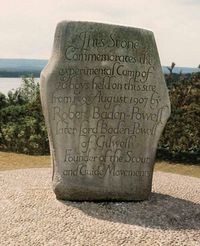 January 24, 1908 marked the publication of the first instalment of Robert Baden-Powell’s “Scouting for Boys”. There were six fortnightly instalments, which were collected and published in book form later in the same year. Both the magazine and the book version became immensely popular and not just among parents but among boys as well.
The story is well known. Robert Baden-Powell had defended Mafeking and part of his strategy was to mobilize boy volunteers into groups of scouts, thus leaving the fighting to the men. As the Wikipedia entry on the subject puts it:
The youths supported the troops by carrying messages, which freed the men for military duties and kept the boys occupied during the long siege.The idea of keeping children occupied with something useful that they can perceive to be useful is not a particularly difficult one but has disappeared from most of our educational discussions.
 Counterfactuals are a lot of fun and, except for people who say rather grandly that they are not interested in alternatives, thus showing themselves to be determinists, of some import. Faced with certain historical developments it is tempting to take them apart and remove one particular aspect to see whether the same conclusion could have been reached. Most times the author of the counterfactual has to admit that history would probably have been quite similar.
There are, of course, some events and some people so crucial to the particular historical development that took place that their absence would, quite literally, have made all the difference in the world. One such event is the arrival of Lenin at the Finland Station in Petrograd in April 1917.
The one I am proposing as a question is considerably less important and less likely to have made any difference.
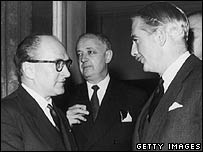
There has been a great deal of what might be called kerfuffle around the formerly secret documents, now unearthed, that show Guy Mollet, then Prime Minister of France, proposed, firstly, a union between France and Britain and, when that was greeted with pursed lips and raised eyebrows, for France to become part of the Commonwealth.
As it happens, Sir Anthony Eden rejected both suggestions, no doubt with some bemusement and elegantly raised eyebrows. Had he not done so, neither idea could possibly have got through either Westminster or the Assemblée Nationale. So, that’s really that. The story is of interest only as a possible counterfactual analysis: what if France had become a member of the Commonwealth in 1956?
On the other hand, it might be worth one’s while to speculate a little as to why Mollet came up with such a harebrained and rather desperate scheme. After all, nobody had treated Churchill’s suggestion of an Anglo-French union in 1940 particularly seriously.
Mollet is generally described as an Anglophile though as someone on the left of French politics his Anglophilia remains somewhat questionable. He does seem to have been impressed and grateful for the help Britain had given the French resistance during World War II.
There is the suggestion that he wanted to use the British card in his negotiations with West Germany over the Common Market. Unfortunately, the British card was no longer in the pack, having dropped out in 1955.
A more serious problem in the autumn of 1956 was France’s involvement in North Africa and the Middle East. The Algerian War was beginning to take its toll in political and economic terms and the French suspected rightly that Gamal Nasser, the self-appointed ruler of Egypt was supplying the FLN with arms and ammunition in the name of the anti-colonial struggle.
As a left-winger, Mollet had previously opposed French colonialism in North Africa and welcomed all chances of negotiation with the FLN. As Prime Minister, he announced that the rebels had to be defeated first and negotiated with afterwards. Possibly, as one who had opposed the war previously, he felt anxious to prove his credentials as a strong leader.
France was still a staunch ally of Israel with a left-wing government being particularly strongly supportive. (How times change.)
When Nasser announced the nationalization of the Suez Canal in July, France was considerably more gung-ho than Britain in her desire to punish the upstart leader. It was France that pushed the initially reluctant Israelis towards a military plan.
September 1956 was a time when Britain once again seemed to be dragging her feet. British soldiers had left the Suez zone. Initial support for a military solution to the crisis was waning. Israel was worried that she would find herself in the unwelcome position of the fall guy. And the war in Algeria was going on.
Mollet came up with his rather desperate proposal in the hopes that Britain would be tied more firmly into the French struggle to hang on to Algeria and other parts of North Africa, nipping the growing anti-colonial fight led by Egypt, if not precisely in the bud then not too long after early flowering.
The ideas were rejected and the Suez adventure ended badly, not least because of lack of American support. As it happens, the Israelis were successful beyond their wildest dreams in the Sinai but Nasser and other Arab leaders chose to ignore that, concentrating on the humiliation of the two colonial powers, France and Britain.
It was after the Suez debacle that Konrad Adenauer told Mollet that he should make the European Community his revenge for Suez and the negotiations proceeded apace. Britain chose to learn another lesson which, given the much closer cultural links with the United States, made perfect sense: a revival and fostering of the “special relationship”.
The Algerian War went on to its disastrous ending and Nasser’s refusal to accept that Egypt had been militarily defeated in Sinai led almost inexorably to the catastrophe (from the Arab point of view) of the Six-Day War in 1967.
Would any of it have been different if Mollet’s proposals had been taken seriously?
This is the one, Tory Historian suspects, everyone has been waiting for. Are there any new quotes from Margaret Thatcher? Well, I have chose a couple of less well known ones but, I expect, most of our readers on this side of the pond will have heard them.
To me, consensus seems to be the process of abandoning all beliefs, principles, values and policies. So it is something in which no one believes and to which no one objects.And one that is very well known but is rarely given in full:
Why do you climb philosophical hills? Because they are worth climbing. There are no hills to go down unless you start from the top.
There is no such thing as society: there are individual men and women, and there are families.Though not, perhaps, for those who think the state is the one to solve all the problems.
Before I get on to the lady everyone is waiting for (and there has been a fair amount of posting about her) let me produce two quotations from that greatest of all communicators, probably the greatest twentieth century American president, Ronald Reagan. One well known, one not so well known.
Government's view of the economy could be summed up in a few short phrases: If it moves, tax it. If it keeps moving, regulate it. And if it stops moving, subsidize it.
How do you tell a communist? Well, it's someone who reads Marx and Lenin. And how do you tell an anti-Communist? It's someone who understands Marx and Lenin.
Tory Historian has been reading instead of going to exhibitions (well, apart from following the abysmally bad East meets West trail at the Tate Britain) and the book of choice is John O'Sullivan's "The President, the Pope and the Prime Minister", already out in the United States and due out in the UK in the spring. This will be a must-read for all conservatives with either a big 'C' or a small one as it tells the story of three conservatives (Reagan, Thatcher and John Paul II, since you ask) who, n ot so long ago, changed the world we all inhabit.
There will be more postings on the book but this time I would like to recall one of the players: John Paul II, the man who helped to reignite the fight against Communism in Eastern Europe and gave hope to many millions of people there. One does not have to be a Roman Catholic to understand and admire the man's achievement in the political world.
One thing leads to another and reading the book has led to looking up some of John Paul's better known sayings. Here is one I particularly like, as it is the all-purpose reply to anyone who whines about people's alienation in the free world with a free economy:
The historical experience of socialist countries has sadly demonstrated that collectivism does not do away with alienation but rather increases it, adding to it a lack of basic necessities and economic inefficiency.Freedom can, indeed, be quite frightening. But slavery will not provide anyone with security.
 Back in the days Tory Historian studied A level history there was a saying (one with which most readers are probably familiar).
Only two developments in history are inevitable: the country (whichever country) is always going to the dogs and the middle classes are always rising. In fact, there was an urban myth of a history examiner who set the following question: "Give an example of a period when the middle classes were not rising in England and explain why not." Not sure whether there were any takers.
According to Andrew Roberts, a Conservative historian if ever there was one, the present rise of the middle class in the shape of Kate Middleton, possible bride to Prince William, is an entirely GOOD THING. Good for the monarchy and, therefore, good for the country. Sadly, the article is in today's Evening Standard, the newspaper with the most useless website in existence.
Mr Roberts considers it rather a problem that the British royal family has consistently married either European royals (sometimes it worked but sometimes not) or offsprings of the English aristocracy (sometimes it worked but most often not). They should look beyond that rather limited gene pool to the middle classes.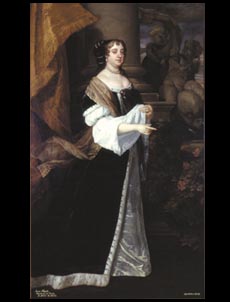
The last time it happened was in 1660, when Anne Hyde, daughter of the politician Edward Hyde, married James, Duke of York, the future King James II. She turned out to be an excellent wife for him, and she ran his politican and economic affairs adroitly. Samuel Pepys might have complained in his dary that "The Duke of York in all things but his amours was led by the nose by his wife," but she led him very well. Had it not been for her tragically early death in 1671, aged only 34, James might not have become one of the most disastrous and shortest-reigning monarchs.There is a wonderful idea for a counterfactual article: what if Anne Hyde, wife of the Duke of York, had not died in 1671. After all, we know that his second marriage, wherein he reverted to type, was anything but successful for him as King. Then again, would we have had the Glorious Revolution?
 Another Bank Holiday and another exhibition. On New Year’s Day Tory Historian visited the excellent and, alas, soon to close “At Home in Renaissance Italy” at the Victoria and Albert Museum. In parenthesis it might be noted that the V & A is a superb museum or would be if the powers that be would finish developing it and get down to running it.
Anyway, the exhibition was not much liked by Brian Sewell, who felt that anything that was not precisely high art and …. gasp …. had a good deal of information about women (domestic life, you see) was really beneath contempt. Or wretched, as he would say.
Tory Historian does not share those prejudices, not least because, as the exhibition notes made it clear, the division between art and craft was not as clear-cut in fifteenth and sixteenth century Italy as it has been since the Romantic period. Mr Sewell, of course, knows that, but makes a point of being contemptuous of many things.
Indeed, the inevitable focus on women and their role was a particularly interesting aspect of the exhibition. The great households of the Italian nobility and the smaller households of the financiers and bankers together with the smaller or, at least, poorer households of the merchants and townsfolk and peasants were run by the women. To be honest, these households resembled small and medium sized businesses and running them well required various skills.
Growing out of that need was the appearance of some of the first books of etiquette, household instruction and cookery. This, of course, presupposes that a sizeable proportion of the women could read those books.
The V & A, on the whole, does not believe in dumbing down. The notes in the permanent and temporary exhibitions can be populist but are definitely on the educational side of the divide. Here they provided a good deal of information and were heavily spiced with useful quotations from contemporary works of literature and instruction.
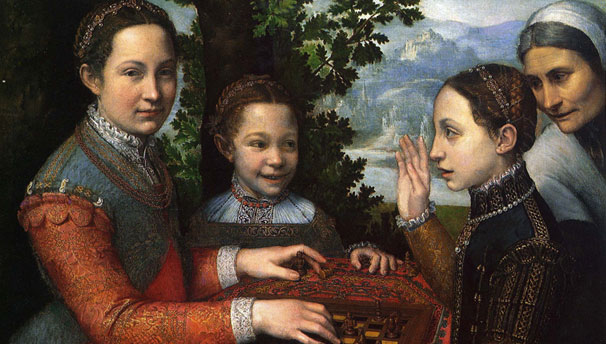
There were one or two mis-steps. Incorrectly, it was pointed out that women’s lives revolved entirely around their biological cycles. The rest of the exhibition gave a lie to that comment. Of course, biological cycles were and are important. Equally, birth, marriage and death were and are crucial events in all lives and many rituals surrounded them in the Renaissance and do so now. But, as I said above, running those households required skills, training and ability. On top of which, they had to entertain guests, be knowledgeable at least to some extent about the various art and craft works around them (to be able to show them off in the right way), read books, say their prayers and teach their children and, according to the artist Sofonisba Anguissola, play chess.
Clearly, the cooking both of household meals and grand banquets were heavily supervised by the mistress of the house, who took part in some of the preparations, particularly of such things as pastry or some special cordial.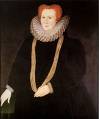
Tory Historian possesses a Penguin edition of a book of sixteenth century recipes, edited by Hilary Spurling, “Elinor Fettiplace’s Receipt Book”. The Fettiplace family were undoubtedly aristocratic but it is clear from the collection and the “receipts” in general that the lady of the house ran the house, particularly as her husband was frequently away at court. Part of that entailed keeping a collection of recipes for cooking, medication, cordials and preserves.
The recipes may have been written out by a secretary but Lady Fettiplace had clearly added new ones and made notes on others. She also swapped recipes with others, like Sir Kenelm Digby and various relatives.
It would be interesting to work out exactly when that attitude changed and it became a badge of honour to the family for the ladies of the house to be idle. There is an interesting conversation in “Pride and Prejudice” that might indicate a change at that very time, though Jane Austen herself, together with her sister, had plenty of domestic duties.
Mrs Bennett has come to visit Jane and Elizabeth who are staying perforce at Netherfield, Mr Bingley’s house. On Elizabeth’s enquiry about her friend Charlotte Lucas, Mrs Bennett explains that she and other Lucases had called in but Charlotte could not stay long as she was wanted at home in connection with the mince pies. Sir William Lucas clearly ran an old-fashioned household in which the women had plenty to do and the boys, possibly, less so. Mrs Bennett explains rather proudly to Mr Bingley and the others that as far as she is concerned there were servants to deal with such matters as the mince pies.
That raises an interesting question: exactly what did the Bennett girls do with themselves day in and day out?
A very happy and prosperous new year to all readers of the Conservative History blog (and of the Journal, whose next issue will appear in January). Tory Historian intends to carry on writing the somewhat random postings of the kind that appeared last year and hopes that many more readers will join in the discussions.
Together with my co-blogger, Iain Dale, I hope that many more of you will join in the Conservative History Group activities and, if you have any ideas about them, please let us know either here or through the Conservative History Group website.
In the meantime, let me remind everyone of an interesting historical date. On January 2, 1776 the Continental Congress published the Tory Act, a set of instructions on how to deal with those misguided, misinformed and mistaken individuals who persisted in supporting loyally their King and Country, that is George III and Great Britain.
The instructions were mild and smacked more than a little of a desire to re-educate those who have been “been deceived and drawn into erroneous opinions, respecting the American cause, and the probable issue of the present contest”.
Resolved, That it be recommended to the several Committees, and other friends to American liberty in the said colonies, to treat all such persons with kindness and attention, to consider them as the inhabitants of a country determined to be free, and to view their errors as proceeding rather from want of information, than want of virtue or public spirit, to explain to them the origin, nature and extent of the present controversy, to acquaint them with the fate of the numerous petitions presented to his Majesty, as well by Assemblies as by Congresses for reconciliation and redress of grievances, and that the last from this Congress, humbly requesting the single favor of being heard, like all the others has proved unsuccessful; to unfold to them the various arts of administration to ensnare and enslave us, and the manner in which we have been cruelly driven to defend by arms those very rights, liberties and estates which we and our forefathers had so long enjoyed unmolested in the reigns of his present Majesty's predecessors. And it is hereby recommended to all Conventions and Assemblies in these colonies liberally toSadly, as the war proceeded, many of these good intentions were abandoned and Loyalists found that they had to flee for their lives (those who managed it). Never mind – Canada benefited.
distribute among the people the Proceedings of this and the former Congress, the late speeches of the great patriots in both houses of parliament relative to American grievances, and such other pamphlets and papers as tend to elucidate the merits of the American cause. The Congress being fully persuaded that the more our right to the enjoyment of our ancient liberties and privileges is examined, the more just and necessary our present opposition to ministerial
tyranny will appear.
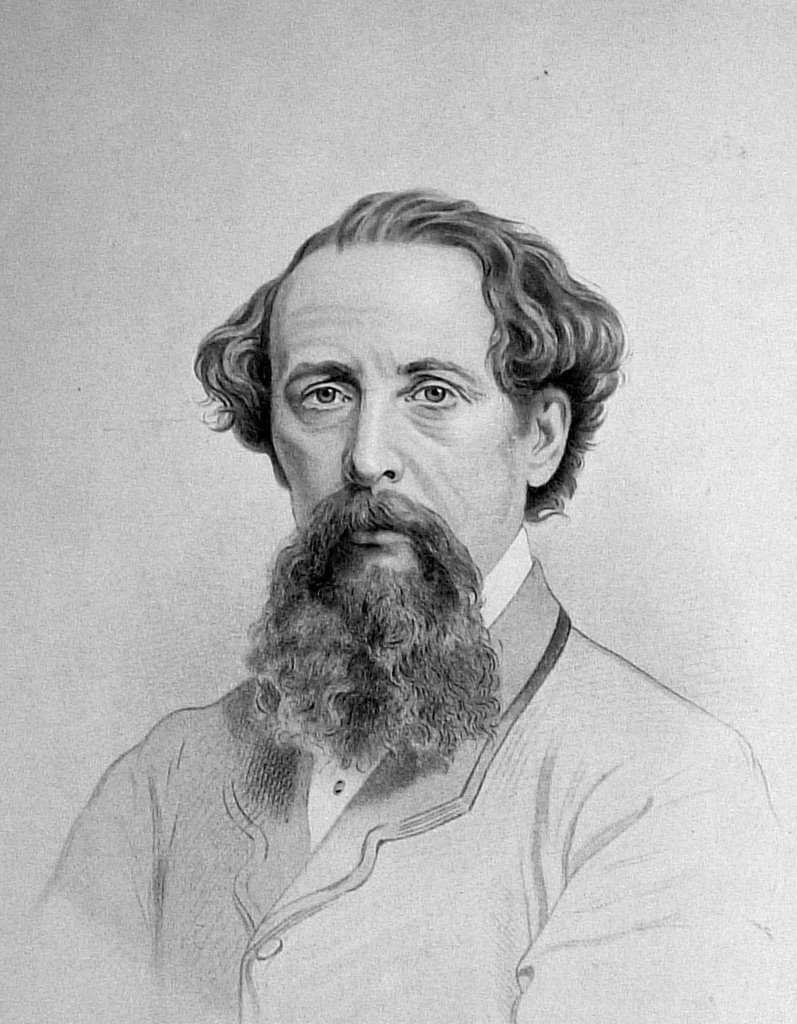 On Boxing Day Tory Historian fulfilled a long-standing plan and visited Dickens House in Doughty Street. Charles Dickens lived there for only three years but it would appear that all the other houses in London that he lived in have been knocked down. So, one takes what one can get.
The house is well-arranged and there is a great deal of information about the man, his work, his life and his friends. A rather surprising failing was in the food department. The drawing room was decorated as for an early Victorian Christmas but the display of festive goodies on the table was rather miserable, as were the promised refreshments before a reading of a part of “The Christmas Carol”. This is not a question of greed. Dickens was pre-eminent in his descriptions of food and drink and general jollity. Those refreshments should have included at least a few of the goodies he describes. To have a couple of boxes of Marks and Spencer biscuits and a few cartons of juice with two bottles of rather uninteresting wine did not do the great man justice. Why not mulled wine with a great deal of raisins and orange peel in it together with a really fine Christmas pie? (Is there a possible career for Tory Historian here?)
There was an exhibition called “Ignorance and Want”, referring to the two miserable children who cling to the Ghost of Christmas Present and dealing with Dickens’s fight both in his writing and in action against those evils. The exhibition immediately raised the question of whether Dickens was a radical as he is described by many.
Undoubtedly, he was on the side of the underdog, of the oppressed, of the humiliated, no matter who they were. In “Tale of Two Cities” he makes it clear that the horrors of the revolution are brought about by the behaviour of the French aristocracy or the rather degenerate members of it that he writes about. But, once the tables are turned, the tumbrils are rolling, the tricoteuses are in place there can be no doubt as to whose side the author is on.
Be they underfed and severely flogged children, exploited clerks, girls forced into prostitution or any other group of victims, Dickens was on their side. He wrote about them with real passion and he tried to help through various organizations such as those set up by Angela Burdett-Coutts. But was he a radical?
It was George Orwell in his first-class essay of 1939 entitled simply “Charles Dickens” who first posed this question and noted that Dickens and his novels are loved by all those he attacked: lawyers, civil servants, teachers of all kind, rich and poor alike. The reason for that, Orwell posited, is that Dickens had not interest in either changing or subverting society.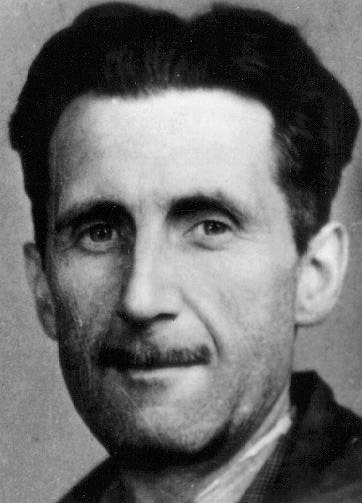
A true representative of the English urban middle class, according to Orwell, Dickens had no interest in serving society.
Parliament is simply Lord Coodle and Sir Thomas Doodle, the Empire is simply Major Bagstock and his Indian servant, the Army is simply Colonel Chowser and Doctor Slammer, the public services are simply Bumble and the Circumlocution Office – and so on and so forth. What he does not see, or only intermittently sees, is that Coodle and Doodle and all other corpses left from the eighteenth century are performing a function which neither Pickwick nor Boffin would ever bother about.Similarly, with education, a topic very close to Dickens’s heart. As Orwell points out, the schools Dickens approves of, such as that of Dr Strong’s are no different from Mr Creakle’s except that the former is run well by a man of noble feelings and attitudes who genuinely loves learning. Why does Dickens not offer some ideas of educational reform, asks Orwell. Why cannot he see that it is the whole system of private property and private enterprise that is wrong?
When one reads any strongly individual piece of writing, one has the impression of seeing a face somewhere behind the page. It is not necessarily the actual face of the writer. … What one sees is the face that the writer ought to have. Well, in the case of Dickens I see a face that is not quite the face of Dickens’s photographs, though it resembles it. It is the face of a man about forty, with a small beard and a high colour. He is laughing, with a touch of anger in his laughter, but no triumph, no malignity. It is the face of a man who is always fighting against something, but who fights in the open and is not frightened, the face of a man who is generously angry in other words, of a nineteenth-century liberal, a free intelligence, a type hated with equal hatred by all the smelly little orthodoxies which are now contending for our souls.Something similar could be said about Orwell, despite his determined attempts to cling to socialist ideology.
 The Hundred Years’ War notoriously lasted 115 years. Either they could not count or they did not know precisely when it started and when it ended. Or, possibly, historians prefer snappy names and titles. Well, anyway, I used to think it was 115 years, but Wikipedia says it was 116, from 1337 to 1453.
The beginning is slightly muddled, with French ships attacking coastal settlements, arguments over the Gascon fiefdom and Edward III helpfully telling the French that he was, in fact, their rightful king.
The ending is probably the last battle, that of Castillon when Talbot (you cannot get much more Shakesperian) was defeated while trying to retake Gascony. Then again, one could argue that the real last battle was that of Calais in 1558. (Whenever people tell me that countries, such as Serbia, have a right to something or other because they were there in the fourteenth century, I suggest taking large parts back to be ruled by the English. Or, at least, an alliance with Burgundy, which had been incorporated forcibly into France round about the time the English lost Calais. Strangely, I get no response.)
While not every year of those 115 or 116 were taken up with fighting a good many were and a very muddled business it was, too, with various smaller states, changing sides as they saw fit, rebellions breaking out within them and peace treaties being signed and broken.
Who knows all the official combatants? On one side there were England, Burgundy, Brittany, Portugal, Navarre, Flanders, Hainault, Aquitaine and Luxembourg; on the other, France, Castile, Scotland, Genoa, Majorca, Bohemia and Aragon. But the lists changed from time to time. It is reasonably clear that one aim of the war was to subdue various duchies and smaller states that the King of France wanted to control.
Enough of that. Let us move on to other wars. The Thirty Years’ War, amazingly enough, lasted just that, starting with the famous second (and unsuccessful) defenestration in Prague in May 1618. (Oh, all right, since you ask, the first one was the killing of seven council members by angry Hussites by throwing them out of the window on to the spears of the armed congregation. (Armed congregation? How different from the everyday life of our own Church of England.)
In the second one, the Protestant Assembly threw out two Imperial governors who had tried to impose their own Roman Catholic religion. The two landed on a pile of manure and left unharmed, though rather smelly.
The final defenestration took place 330 years later, in March 1948. As the Communists took over, the non-Communist Foreign Minister, Jan Masaryk was found under his bathroom window. Yes, I suppose, it might have been suicide. Or he might have been suicided on the orders of Klement Gottwald, the Communist leader.
The ending of the Thirty Years’ War (returning to our muttons) was also clearly defined with the Peace of Westphalia, the two treaties, that of Münster and Osnabrück, signed in the spring of 1648. Confusingly, these also ended the Eighty Years’ War, that of Dutch independence from Spain. (With me, so far?)
The Peace of Westphalia is quite often referred to as the Treaty of Westphalia and is one of the most misunderstood and misquoted documents in modern history. In fact, Tory Historian intends to do a long blog on the subject just as soon as ….
The Thirty Years’ War may have had a definite beginning and ending but it was a muddled affair, with various German states fighting here and there, not to mention Bohemia (part of the Holy Roman Empire), Sweden, France (which did rather well out of it, what with getting Alsace-Lorraine and Metz), Denmark, Spain and the Dutch.
When one gets to the eighteenth century, it can seem as if there was nothing but toing and froing, what with the War of Habsburg Succession and the Seven Years’ War with the diplomatic revolution between them. Still, they all ended with a peace treaty and a more or less accepted settlement.
The continuing French revolutionary and Napoleonic wars remain a headache for all. Again, we know when they ended, though before that there were many breaks, peace treaties that did not hold and countries changing sides either voluntarily or not. That, too, is a subject for another blog or, perhaps, several.
Let us move on, rather rapidly, to the twentieth century. How many wars did it have? My own supervisor at Oxford, A. J. P. Taylor, said a long time ago that the two World Wars were in reality one war that lasted from 1914 to 1945. The two main antagonists remained the same but others changed, empires broke up, new states were created, and various rebellions and changes in political systems rearranged the picture.
Margaret Macmillan in “The Peacemakers” seems reasonably certain that most of what was done in 1945 about Germany should have been done in 1919, though she does acknowledge that the presence of a much stronger United States and Soviet Union changed the situation somewhat.
Much of what the peace negotiations of 1919 wanted to achieve was not to be seen until well after 1945.
Is that the end of the story, though? We know when the great war of the twentieth century started – those shots in July 1914 in Sarajevo. But, just as the Hundred Years’ War started and ended in Gascony, so the twentieth century war started and ended in Sarajevo with the collapse of the Yugoslav state, created with some trouble in 1919 and never at peace with itself.
The end of that process that started with Gavrilo Princip’s shots has not yet arrived. The post-1945 political structure started to unravel in 1991 as the Soviet Union disintegrated but has not stopped doing so.
The after effects of the collapse of the Ottoman Empire have recently become stronger in the Middle East. Iraq was created in the 1920s, as were most of the modern states in the area.
Started in 1914 and ended when? Are we living through another hundred years’ war?
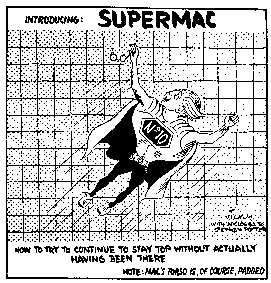 Few British Prime Ministers evoke such passionate feelings on both sides than Harold Macmillan, 1st Earl of Stockton.
To some he is the hero of one-nation conservatism, the man who had seen the need to take Britain into the Common Market (now the European Union), the Tory toff who, not entirely illogically, believed in the state control of almost every part of British economy, thus, slightly less logically, defeating socialism.
To others, he is part of the British problem. His refusal to understand that "manging socialism better than Labour can" contributed to the crisis that was only partially solved by Thatcher's reforms (which he rather grandly criticized in his famous comments about the family silver).
There is no getting away from the fact that the man was a fascinating character, devious and secretive, fond of his buffoonish pretence and an excellent speaker. Tory Historian can recall a speech he made at the opening of the new History Department in Oxford, his rather doddery diction suddently acquiring strength and crispness when he came to criticizing people he disliked.
The Tory Reform Group has unearthed a recording of Lord Stockton making a speech at the group's 10th anniversary dinner in 1985. Our readers might well enjoy listening to it.
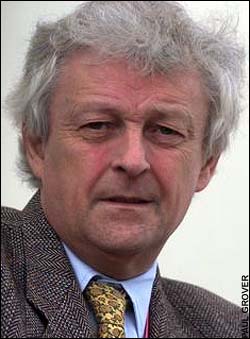 Just about two weeks ago I asked a mutual acquaintance about Frank Johnson's health and was told that he was as well as can be expected, though counting each week as a blessing. Those blessings have come to an end. This morning, Frank Johnson died at the age of 63 this morning. The words "after an illness bravely borne" have become a bit of a cliche but in this case they are absolutely accurate.
Frank's biography is well-known: the son of an East End pastry cook, he left school with one O-level (reportedly in woodwork) and started his spectacular career as the tea boy on the Sunday Express. After a stint on the Walthamstow Guardian, Liverpool Post and The Sun, he was hired by that prince of all editors, Colin Welch, to be a reporter in the House of Commons on the Daily Telegraph.
He and John O'Sullivan shared the sketch writing, a witty revival of much earlier parliamentary reporting. They also promoted Margaret Thatcher's free-market policies in the late seventies in the teeth of establishment opinion (though they were supported by Colin Welch).
An auto-didact, immensely knowledgeable about history, literature, classical music and other cultural matters, Frank Johnson was a natural conservative but one who is unlikely to be appreciated (despite the undoubted crocodile tears that will flow) by the present Tory-Toff leadership.
 In between other tasks Tory Historian has been ploughing on with Margaret MacMillan’s “Peacemakers”. Actually, that is the wrong expression as the book is very interesting and extremely well written. Even the fact that Dr MacMillan clearly has a special fondness for those two rogues, Lloyd George and Clemenceau, does not detract from the interest in this detailed and vivaciously told book.
As the story unfolds the reader can follow the creation and growth of the many problems the world is still trying to grapple with.
It will be interesting to see whether Margaret MacMillan will produce the costs of the Paris Conference. The participants of the Great War had come out significantly poorer than they had gone in. France, in particular, had suffered enormously, both in economic and human terms, as Clemenceau never ceased to remind others of the Conference. Yet it managed to lay on an astonishingly lavish conference and many of the participants spent much of their remaining income on large and well-equipped delegations.
Some discussions, though, do not change:
The Supreme Council managed to choose a secretary, a junior French diplomat who was rumoured to be Clemenceau’s illegitimate son. (The extraordinarily efficient [Sir Maurice] Hankey, the deputy secretary, soon took over most of the work.) After much wrangling it decided on French and English as the official languages for documents. The French argued for their own language alone, ostensibly on the grounds that it was more precise and at the same time capable of greater nuance than English, in reality because they did not want to admit France was slipping down the rankings of world powers.But the row has gone on ever since.
French, they said, had been the language of international communication and diplomacy for centuries. The British and Americans pointed out that English was increasingly supplanting it.
Lloyd George said that he would always regret that he did not know French better (he scarcely knew it at all), but it seemed absurd that English, spoken by over 170 million people, should not have equal status with French.
The Italians said, in that case, why not Italian as well. ‘Otherwise,’ said the foreign minister, Sonnino, ‘it would look as if Italy was being treated as an inferior by being excluded’.
In that case, said Lloyd George, why not Japanese as well? The Japanese delegates, who tended to have trouble following the debates whether they were in French or English, remained silent. Clemenceau backed down, to the consternation of many of his own officials.
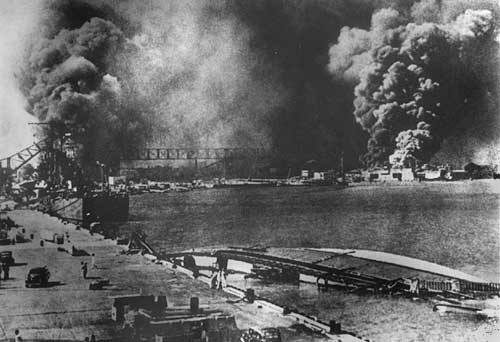 Today is the 65th anniversary of the attack on Pearl Harbour and here is a picture of what the place looked like immediately after it.
Rather than discussing the attack I should like to pose a couple of questions. After the Japanese attack on the United States, Germany declared war on that country as well. As it happens, Hitler could have gone the other way. He disliked America and all it stood for but, given his views on race, he could not have been all that fond of the Japanese either. What would have happened if he had allied himself with the United States and declared war on Japan? Or stayed out of the conflict in the Pacific?
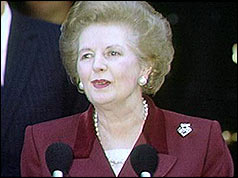 It should have been yesterday but a twisted ankle kept Tory Historian from the computer. November 28, 1990 – most of us can remember the day Margaret Thatcher formally resigned as Prime Minister and made a last, tearful statement from Downing Street:
We're leaving Downing Street for the last time after eleven-and-a-half wonderful years and we're happy to leave the UK in a very much better state than when we came here.How many Prime Ministers can honestly say that?
 A thirty-minute radio play with that title by Agatha Christie was broadcast in May 1947 on Queen Mary’s 80th birthday, as a present for her (the royal family has had a number of Christie fans among its members).
Later Christie expanded the play into a longer one (she often developed themes first explored in short stories to create novels), called “The Mousetrap”. And who has not heard of it?
The play opened at the Ambassadors Theatre on November 25, 1952 and has been running ever since, though it transferred to St Martin’s Theatre some years ago. There have been over 21,000 performances and more than 300 actors have played in it.
The original stars were Richard Attenborough and Sheila Sim. Any other information you want? There is a website devoted to the play, which will tell you everything you want to know. Well, almost everything. The identity of the murderer remains a closely guarded secret.
 For once, The Scotsman has produced a fascinating article.
It seems that the diaries of James Fraser, an Episcopalian Minister, who set off in 1657 from Inverness, journeyed to Aberdeen, down the east coast of Scotland to Edinburgh, then to England, where he described the country under Cromwell's rule that he definitely disapproved of, and to a number of Continental countries.
During his expedition, Fraser witnessed the early days of Cromwell's London, was suspected of being a Protestant spy in a Catholic college and even took a job with the Swiss Guard in Rome and guarded the Queen of Sweden's residence.He was fascinated by what he saw in England and by the English, whom he describes as great meat eaters. His view of the body politic was pessimistic:
He was keen to learn about other religions and wanted to see England and Rome: "ones the seat of the Roman Empire, & who suddenly invaded the world and fixt it selfe such firm foundations as [none] other ever did. Also held to be the fountain of all Science, policy and arts civil and Ecclesiastick. Hopeing to find some sparks of these Cinders not yet put out among the modern Romains."
But there was never more treason in England and about London than now; though not against a King, butt against a parlement, a Commonwalth, a Cromuell. Some one or other every day impeacht for high treason against the State (so tearmed) Lords, souldioures, Churchmen, Phisitians, some hangd, others have their heads cut off, some shot to death, which is the Military execution; for after King Charles his death, the Scaffold runs still wt bloud.Equally interesting comments are quoted from his description of other countries.
 The death of Milton Friedman yesterday at the age of 94 has prompted a great deal of reminiscing. While the Nobel laureate economist was not precisely a conservative with either a small or a big c, he was the progenitor of many economic and political ideas that made modern conservatism exciting and successful for a long time.
So, here are a few quotes that Tory Historian would like to share with the readers (who might want to come up with quotes and stories of their own):
I am favor of cutting taxes under any circumstances and for any excuse, for any reason, whenever it's possible.And for anyone who has not yet done so, read "Free to choose" by Rose and Milton Friedman. Easy to read, easy to understand, easy to convert to.
Hell hath no fury like a bureaucrat scorned.
Many people want the government to protect the consumer. A much more urgent problem is to protect the consumer from the government.
Nobody spends somebody else's money as carefully as he spends his own. Nobody uses somebody else's resources as carefully as he uses his own. So if you want efficiency and effectiveness, if you want knowledge to be properly utilized, you have to do it through the means of private property.
The Great Depression, like most other periods of severe unemployment, was produced by government mismanagement rather than by any inherent instability of the private economy.
There's no such thing as a free lunch.
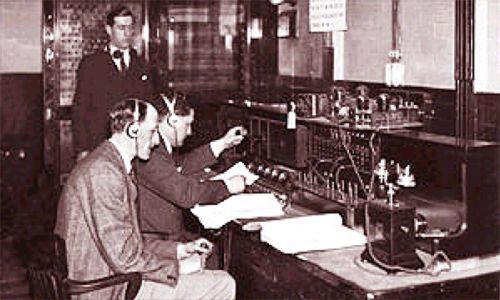 Today is the Prince of Wales’s birthday but that seems to fade into insignificance when one notes that November 14, 1922 was the day of the first broadcast by the newly formed British Broadcasting Company from station 2LO, located at Marconi House, London.
Of course the real problems came in 1927 when the British Broadcasting Corporation was formed under Lord Reith, a Royal Charter was granted and the possibilities of independent broadcasting were scotched for many years to come.
Indeed, that Royal Charter and the licence (in effect a poll tax) are still with us and still distorting broadcasting in this country, despite the various technological developments since 1922.
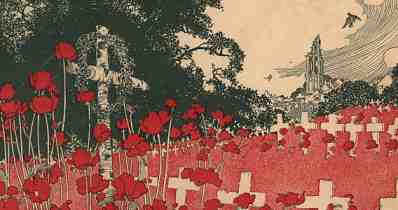
In Flanders fields the poppies grow
Between the crosses, row on row,
That mark our place, and in the sky,
The larks, still bravely singing, fly,
Scarce heard amid the guns below.
We are dead; short days ago
We lived, felt dawn, saw sunset glow,
Loved and were loved, and now we lie
In Flanders fields.
The First World War produced more poems in the English language than possibly any other. This particular one was written by a Canadian, Dr John McCrae in early May 1915, during the second battle of Ypres. It was first published, anonymously, in Punch in December of that year, though the authorship was soon established.
Dr McCrae stayed in France until January 1918. He died of pneumonia, compounded by exhaustion and depression on January 28. He was 45 years old.
Some years ago one of Tory Historian’s clever-dick journalist friends put forward the suggestion that Remembrance Day should be moved from November 11 (and, presumably, Remembrance Sunday from the nearest Sunday) because that was too closely linked in people’s minds with the First World War. This was before Gordon Brown in a fit of leadership fever suggested having a British Veterans’ Day.
To all of these suggestions Tory Historian can reply with the well-known political adage: “if it ain’t broke, don’t mend it”. The eleventh hour of the eleventh day of the eleventh month is easy to remember and the inherited memory of that war is hard to erase (or change despite its severe inaccuracies) precisely because of the poems.
While the image created by the poets was potent the analysis that has grown out of it is not entirely accurate. The image serves us well for remembrance of the dead of that and many other wars.
They shall not grow old, as we that are left grow old,
Age shall not weary them, nor the years condemn,
At the going down of the sun and in the morning,
We will remember them.
 With Remembrance Day approaching fast, Tory Historian has at last managed to start reading Margaret Macmillan’s multiple award winning “Peacemakers”, an account of the negotiations, intrigues and agreements that resulted in the Versailles Treaty as well as the various other satellite treaties at the end of World War I.
The twentieth century is a somewhat odd one. Various historians, conservative and others, have called it “the short century” as its reality did not begin till 1914. One must recall that, unlike the twenty-first century, which was greeted with a great deal of gloom and depression, the twentieth was seen almost everywhere (Russia was probably a notable exception) as one that heralded in a new and better, more peaceful, more advanced future.
Those were days when the word “modern” meant something and the something was, by and large, positive. A century later it is a word that is used with deep gloom by most people except politicians who produce it in order to impose something deeply unpopular and, usually, rather oppressive on the population.
The Great War is generally seen as the beginning of the many horrors that the succeeding twentieth century consisted of. And all for what? After tens of millions of deaths, hundreds of millions wounded, tortured, imprisoned, deprived of their homes and property; after whole societies and cultures destroyed, at the end of the century much of what had seemed to have been wrapped up in the first twenty years reappeared in the news.
Once again the media resounds to names like Sarajevo, Bosnia-Herzegovina, Kabul and Heart, Baghdad and Basra. Almost a hundred years after the signing of the Versailles Treaty, whose terms are often described as inevitably leading to World War II, we are still grappling with the problems either created or set loose by those negotiations in Paris so ably and wittily described by Dr Macmillan.
Let us, however, look at the beginning of it all, the great hopes of a new world that was going to be created by the great and wise in Paris out of the horrors of the war that had recently ended.
For four years the most advanced nations in the world had poured out their men, their wealth, the fruits of their industry, science and technology, on a war that may have started by accident but was impossible to stop because the two sides were too evenly balanced. It was only in the summer of 1918, as Germany’s allies faltered and as the American troops poured in, that the Allies finally gained the upper hand. The war ended on 11 November. Everywhere people hoped wearily that whatever happened next would not be as bad as what had just finished.Little did they know and, perhaps, just as well. It is always good to have a little period of hope, though it was already disappearing in some parts of Europe. As it happens, yesterday was the anniversary of the Bolshevik coup in Petrograd, a coup which destroyed any hopes of Russia developing along some kind of democratic path; a coup that created the most monstrous of history’s many monstrous systems; a coup that probably completed the destruction of European power.
Four years of war shook forever the supreme self-confidence that had carried Europe to world dominance. After the western front Europeans could no longer talk of a civilizing mission to the world. The war toppled governments, humbled the mighty and upturned whole societies. In Russia the revolutions of 1917 replaced tsarism, with what no one yet knew. At the end of the war Austria-Hungary vanished, leaving a great hole at the centre of Europe. The Ottoman Empire, with its vast holdings in the Middle East and its bit of Europe was almost done. Imperial Germany was now a republic. Old nations – Poland, Lithuania, Estonia, Latvia – came out of history to live again and new nations – Yugoslavia and Czechoslovakia – struggled to be born.
 All this required a great deal of management, which was impossible. The conflicting claims, the desire to go forward with some kind of liberal structures, the need not to destroy the defeated countries (overlooked at some cost to themselves eventually) by some of the victors, the hope for peace that would be guaranteed by international bodies and, above all, the reality on the ground of a messy, disintegrating political world, produced peace treaties that were flawed at best and botched at worst.
Tory Historian was brought up to believe that dates are the backbone of history. This is not a particularly popular view among school teachers and examiners nowadays, which may account for the number of people who find history boring. Boring? How can one find it boring? It’s about people and what they did and why.
Tory Historian was also, as mentioned in at least one previous posting, brought up by a historian father whose memory for historical dates was phenomenal and who related any date and any set of figures to a well-known historical event. Some things run in the family.
So, what have we for today? What happened on this day in history and how was the world affected by any of them?
1517, for all those who did Tudors’n’Stuarts for history A level was the year in which Martin Luther posted his 95 theses to the door of the Castle Church in Wittenberg and that was on October 31. The outcome is of undoubted importance as the beginning of the split in the Western Christian Church and growth of Protestantism.
Do we care about Houdini dying on this day in 1926 as a result of being punched in the stomach before he could prepare his muscles? Perhaps not, except maybe to point out that the man born, as Erik Weisz in Budapest, was another Hungarian who made his mark on the world. Well, no, that is not all that important.
1961, October 31 saw the removal of Stalin’s body from the Mausoleum after two denunciations by the then General Secretary of the CPSU, Nikita Khrushchev at the Twentieth Congress in 1956 and the Twenty-Second Congress in 1961, though it is possible that the body was beginning to smell a bit and, therefore, had to be burnt with the ashes placed into the Kremlin wall.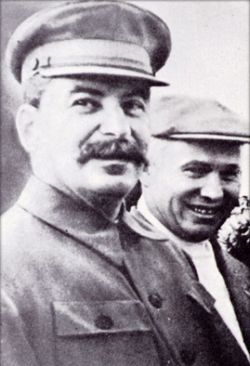
1776, October 31, saw King George III addressing the British Parliament (well, the House of Lords, to be precise) for the first time since the American Declaration of Independence. He announced the victory over George Washington’s forces at the Battle of Long Island, after which the War of Independence could have gone differently with, possibly, numerous Patriot officers executed as traitors. However, the defeated army was dealt with leniently and further negotiations were attempted. But the King was right: the campaign was going to be long and difficult and, as nobody fully realized at the time, victorious for the Patriots. A good day for the Anglosphere? Presumably, the Loyalists did not think anything was good about the War of Independence or its outcome.
On this day in 1956 the British and French troops landed in the Suez canal zone, the Israelis having already swept through the Sinai. Suez deserves a separate posting and an article in the next issue of the Conservative History Journal, being a turning point in the development of the Western alliance after World War II.
In 1984 on this day, Prime Minister Indira Gandhi was assassinated by two of her Sikh guards in revenge for the attack on the Golden Temple in Amritsar in 1984.
However, the most exciting event took place on October 31, 1892 with the publication of “The Adventures of Sherlock Holmes” as a volume. The first novella, “A Study in Scarlet”, had been published in Beeton’s Christmas Annual of 1887 and the individual stories of the collection had been coming out in Strand Magazine since 1891. But this was the first collection. A great day for all of us.
 You can tell a good deal about a country by its sausages. England is quite unusual in that all of them are raw (though there are now attempts by various butchers to make salami and other suchlike delicacies). Tory Historian has been reminded on various occasions of Otto von Bismarck’s saying:
People who enjoy eating sausage and obeying the law should not watch either being made.That’s as may be. Tory Historian recalls a very pleasant visit as a child to a salami factory in one of the two countries that make the best. (Guesses are accepted in the comments section.)
Despite all this, not all is well in the sausage world, with the frozen variety seeing sales slump by 9.6pc last year. At least, it's not as much of a crisis as the one that hit the sausage world 1,200 years ago when Byzantine Emperor Leo V declared the sausage-makers would be "severely scourged, smoothly shaved and banished from our realm forever".Leo V? One of the famous iconoclastic Emperors? Were the sausage makers in cahoots with the iconodulists, whose policies were associated according to Wikipedia, with Byzantine defeats by the Bulgarians and the Arabs? An interesting idea.
It's not clear what sausage-sellers had done to squeeze the emperor's casing. Still, Leo ended up being assassinated and therein lie some lessons for us all. It's clearly not worth getting in the way of this sausage machine.
was less ignorant than the greater part of his contemporaries in church and state, that his education had been directed by the learned Photios, and that several books of profane and ecclesiastical science were composed by the pen, or in the name, of the imperial philosopher.
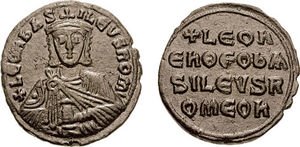 Be that as it may, Leo VI seems to have led as colourful a life as his predecessor and successors, many of whom were assassinated (Leo V, apparently, as he was praying in the Hagia Sophia). But there is one thing Leo VI did do that marks him out from the long list of Byzantine emperors: he outlawed the production of blood sausages after cases of food poisoning.