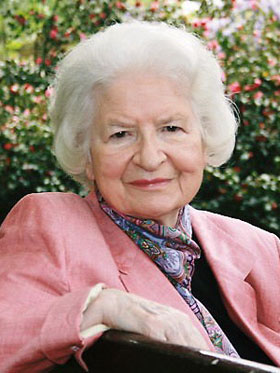
It is fortuitous that Lord Lexden, the official historian of the Conservative Party and of the Carlton Club as well as the Chairman of the Conservative History Group should have a birthday on April 20, immediately after Primrose Day. He is, among other things, the historian of that very fine organization, his book having been reviewed on this blog soon after it was published.
When the CHG tweeted about the fact that Lord Lexden was 70 somebody replied that, given his extraordinary knowledge, he must be at least 150. And, indeed, it is hard to imagine how any one person can have packed that amount of learning into 70 years. I may add, as someone who has had to "edit" the then Alistair Cook's articles for the printed version of the Conservative History Journal is that he is every editor's dream: not a single comma had to be changed in his learned but crisply written pieces.
Not so long ago, this blog directed readers towards an article in the 2014 issue of the Journal about the end of the Stuart dynasty and the beginning of the Hanoverian one, written by Alistair Lexden. His most recent appearance in print was a letter in The Times that called attention to a long-standing Conservative idea: the property-owning democracy, which was originated by Noel Skelton in 1923 though he was more interested in a wider ownership of industry. That, of course, is a little out of date as industries tend to be smaller in size and ownership is more widely dispersed.
We can rely on Lord Lexden, however, for putting politicians and opinion-mongers right on details of Conservative history.
The Conservative History Journal has had many postings about Dorothy L. Sayers, one of the best-known detective story writers and creator of Lord Peter Wimsey, popular theologian, literary scholar, playwright and undoubtedly a conservative in all her thoughts.
She is mentioned in the piece on scouting, described as being more anti-Semitic than John Buchan (one of TH's favourite postings), referred to in a general posting on the conservative nature of detective stories, quoted on various matters here and here and discussed as author of The Man Born to be King and of an essay on English character. Undoubtedly, there will be postings in the future.
That being so, Tory Historian feels only mildly guilty at being a day late in wishing Miss Sayers happy 119th birthday.
Firstly, one of my own favourite writers and historic personalities: Samuel Pepys, born on February 23, 1633 in the heart of London, just off Fleet Street, to real London parents a tailor and the daughter of a Whitechapel butcher. Pepys is known largely these days for his astonishing diaries, now fully in print with excellent and scholarly notes by R. C. Latham and W. Matthews but let us not forget his achievements as a naval administrator, the man who, to some extent, was responsible for the growth of the Royal Navy under Charles II and for reforms that eliminated at least some of the corruption around the building and equipping of ships.
It has been said that were he to live in the early twenty-first century, Pepys would almost certainly have kept a blog. Possibly that is so, though we must not forget that he kept his diary in a short-hand invented by himself. However, there is a blog that produces relevant entries from Sam's own diary for different years and a website that deals with the man as well as his writings.
Someone once asked me whether I'd read the diary right through from beginning to end. No, I replied, it is not something one can do with any pleasure. Those volumes are for dipping in, for leafing back and forth, for getting engrossed and, above all, for quoting on many subjects.
The second birthday is that of George Frideric Handel, born on February 23, 1685 in Halle, the Duchy of Magdeburg to parents who seem to have been completely uninterested in music. Having come to England first in 1710, he decided to settle here in 1712 and proceeded to write a large number of oratorios, operas and other pieces. His influence on English music is almost incalculable and so I shall leave it at that. I am sure many of this blog's readers will know far more on the subject than I do, much though I enjoy Handel's work.
However, I cannot resist two interesting additions. Handel settled down in 1723 at 25 Brook Street in Mayfair and lived there till the end of his life. It is now the home of the Handel Museum. By one of those curious coincidences that history abounds in there is a blue plaque next door to it as well: Jimmi Hendrix lived at 23 Brook Street in 1968 - 69, moving out a year before he died of a drug overdose.
By another coincidence, that is merely personal, I was reading about Rosa Newmarch, in her day and important musicologist but not as well known as she should be these days. She championed Russian music in England, helped to promote Jean Sibelius and later Leoš Janáček, was close to Edward Elgar and Henry Wood as well as many others. In her 1904 book on Henry Wood she wrote of her dislike for the "anaemic" religious music of Britain that flourished throughout the nineteenth and early twentieth century, adding that these pieces were
cuckoo eggs, imported from Germany by Handel and Mendelssohn and hatched in British nests to the detriment of our native singing birds, who might otherwise have developed a distinct note of their own.An interesting theory.
Actually it was yesterday but Tory Historian was busy with other non-cyber matters. A belated happy birthday to Baroness Thatcher, three-times Conservative Prime Minister and still an inspiration to many across the world, for yesterday.
Tory Historian wanted to see the year out with some spectacular birthday or anniversary. Nothing much seems to have happened on December 31 and the birthday of Charles Edward Stuart, the Young Pretender, hardly seems worth celebrating.
Yet more apologies for a prolonged silence. Other matters have intruded.
Today we should turn our attention to those astonishing people, the scientists and engineers of the late eighteenth and early nineteenth century; the people who made this country truly great.
The reason for that is because August 9 is the anniversary of the birth of Scottish engineer, architect and stonemason, Thomas Telford. The son of a shepherd, who died soon after his birth, he was apprenticed to a stonemason at the age of 14 and was largely self-taught.
The list of his achievements make one feel rather dizzy. He built important roads, canals and bridges in England, Wales and Scotland. He was called the “Colossus of Roads” by his great friend, the poet Southey, one the Lake Poets in his early life and a Poet Laureate later on. Presumably, the idea of two cultures simply did not occur to these people.
When you have read Thomas Telford’s biography have a look at the list of the Men of Science Alive in 1807 - 08, pictured in the group portrait above.
This is a posting that celebrates great people so there will be no moaning and tearing out of hair because these days our universities and firms find it hard to recruit British students who could get anywhere near studying or practising science and engineering.
Even somebody like Tory Historian who finds sports events just a tiny bit dull, has to thrill to the story of Sir Roger Bannister and the breaking of the four-minute mile on May 6, 1954 in Oxford. (Actually, Tory Historian has seen the plaque on Iffley Road.)
There is something undeniably English about the man in his quiet persistence, overcoming initial disappointment and equally quiet withdrawal from too much public attention to carry on with his medical work and research. Of course, some people might argue that even in England that sort of behaviour is a thing of the past.
Today's is Sir Roger Banniser's birthday. Happy Birthday, Sir Roger.
Links
Followers
Labels
- 1922 Committee (1)
- abolition of slave trade (1)
- Abraham Lincoln (2)
- academics (2)
- Adam Smith (2)
- advertising (1)
- Agatha Christie (4)
- American history (33)
- ancient history (4)
- Anglo-Boer Wars (1)
- Anglo-Dutch wars (1)
- Anglo-French Entente (1)
- Anglo-Russian Convention (2)
- Anglosphere (19)
- anniversaries (175)
- Anthony Price (1)
- archaelogy (8)
- architecture (8)
- archives (3)
- Argentina (1)
- Ariadne Tyrkova-Williams (1)
- art (14)
- Arthur Ransome (1)
- arts funding (1)
- Attlee (2)
- Australia (1)
- Ayn Rand (1)
- Baroness Park of Monmouth (1)
- battles (11)
- BBC (5)
- Beatrice Hastings (1)
- Bible (3)
- Bill of Rights (1)
- biography (21)
- birthdays (11)
- blogs (10)
- book reviews (8)
- books (78)
- bred and circuses (1)
- British Empire (7)
- British history (1)
- British Library (9)
- British Museum (4)
- buildings (1)
- businesses (1)
- calendars (1)
- Canada (2)
- Canning (1)
- Castlereagh (2)
- cats (1)
- censorship (1)
- Charles Dickens (3)
- Charles I (1)
- Chesterton (1)
- CHG meetings (9)
- children's books (2)
- China (2)
- Chips Channon (4)
- Christianity (1)
- Christmas (1)
- cities (1)
- City of London (2)
- Civil War (6)
- coalitions (2)
- coffee (1)
- coffee-houses (1)
- Commonwealth (1)
- Communism (15)
- compensations (1)
- Conan Doyle (5)
- conservatism (24)
- Conservative Government (1)
- Conservative historians (4)
- Conservative History Group (10)
- Conservative History Journal (23)
- Conservative Party (25)
- Conservative Party Archives (1)
- Conservative politicians (22)
- Conservative suffragists (5)
- constitution (1)
- cookery (5)
- counterfactualism (1)
- country sports (1)
- cultural propaganda (1)
- culture wars (1)
- Curzon (3)
- Daniel Defoe (2)
- Denmark (1)
- detective fiction (31)
- detectives (19)
- diaries (7)
- dictionaries (1)
- diplomacy (2)
- Disraeli (12)
- documents (1)
- Dorothy L. Sayers (5)
- Dorothy Sayers (5)
- Dostoyevsky (1)
- Duke of Edinburgh (1)
- Duke of Wellington (14)
- East Germany (1)
- Eastern Question (1)
- economic history (1)
- Economist (2)
- economists (2)
- Edmund Burke (7)
- education (3)
- Edward Heath (2)
- elections (5)
- Eliza Acton (1)
- engineering (3)
- English history (56)
- English literature (34)
- enlightenment (3)
- enterprise (1)
- Eric Ambler (1)
- espionage (2)
- European history (4)
- Evelyn Waugh (1)
- events (22)
- exhibitions (12)
- Falklands (3)
- fascism (1)
- festivals (2)
- films (13)
- food (7)
- foreign policy (3)
- foreign secretaries (2)
- fourth plinth (1)
- France (1)
- Frederick Burnaby (1)
- French history (3)
- French Revolution (1)
- French wars (1)
- funerals (2)
- gardeners (1)
- gardens (3)
- general (17)
- general history (1)
- Geoffrey Howe (2)
- George Orwell (2)
- Georgians (3)
- German history (3)
- Germany (1)
- Gertrude Himmelfarb (1)
- Gibraltar (2)
- Gladstone (2)
- Gordon Riots (1)
- Great Fire of London (1)
- Great Game (4)
- grievances (1)
- Guildhall Library (1)
- Gunpowder Plot (3)
- H. H. Asquith (1)
- Habsbugs (1)
- Hanoverians (1)
- Harold Macmillan (1)
- Hatfield House (1)
- Hayek (1)
- Hilaire Belloc (1)
- historians (38)
- historic portraits (6)
- historical dates (10)
- historical fiction (1)
- historiography (5)
- history (3)
- history of science (2)
- history teaching (8)
- History Today (12)
- history writing (1)
- hoaxes (1)
- Holocaust (1)
- House of Commons (10)
- House of Lords (1)
- Human Rights Act (1)
- Hungary (1)
- Ian Gow (1)
- India (2)
- Intelligence (1)
- IRA (2)
- Irish history (1)
- Isabella Beeton (1)
- Isambard Kingdom Brunel (1)
- Italy (1)
- Jane Austen (1)
- Jill Paton Walsh (1)
- John Buchan (4)
- John Constable (1)
- John Dickson Carr (1)
- John Wycliffe (1)
- Jonathan Swift (1)
- Josephine Tey (1)
- journalists (2)
- journals (2)
- jubilee (1)
- Judaism (1)
- Jules Verne (1)
- Kenneth Minogue (1)
- Korean War (2)
- Labour government (1)
- Labour Party (1)
- Lady Knightley of Fawsley (2)
- Leeds (1)
- legislation (1)
- Leicester (1)
- libel cases (1)
- Liberal-Democrat History Group (1)
- liberalism (2)
- Liberals (1)
- libraries (6)
- literary criticism (2)
- literary magazines (1)
- literature (7)
- local history (2)
- London (14)
- Londonderry family (1)
- Lord Acton (2)
- Lord Alfred Douglas (1)
- Lord Hailsham (1)
- Lord Leighton (1)
- Lord Randolph Churchill (3)
- Lutyens (1)
- magazines (3)
- Magna Carta (7)
- manuscripts (1)
- maps (9)
- Margaret Thatcher (21)
- media (2)
- memoirs (1)
- memorials (3)
- migration (1)
- military careers (1)
- monarchy (12)
- Munich (1)
- Museum of London (1)
- museums (5)
- music (7)
- musicals (1)
- Muslims (1)
- mythology (1)
- Napoleon (3)
- national emblems (1)
- National Portrait Gallery (2)
- nationalism (1)
- naval battles (3)
- Nazi-Soviet Pact (1)
- Nelson Mandela (1)
- Neville Chamberlain (2)
- newsreels (1)
- Norman conquest (1)
- Norman Tebbit (1)
- obituaries (25)
- Oliver Cromwell (1)
- Open House (1)
- operetta (1)
- Oxford (1)
- Palmerston (1)
- Papacy (1)
- Parliament (3)
- Peter the Great (1)
- philosophers (2)
- photography (3)
- poetry (5)
- poets (6)
- Poland (3)
- political thought (8)
- politicians (4)
- popular literature (3)
- portraits (7)
- posters (1)
- President Eisenhower (1)
- prime ministers (27)
- Primrose League (4)
- Princess Lieven (2)
- prizes (3)
- propaganda (8)
- property (3)
- publishing (2)
- Queen Elizabeth II (5)
- Queen Victoria (1)
- quotations (31)
- Regency (2)
- religion (2)
- Richard III (6)
- Robert Peel (1)
- Roman Britain (3)
- Ronald Reagan (4)
- Royal Academy (1)
- royalty (9)
- Rudyard Kipling (1)
- Russia (10)
- Russian history (2)
- Russian literature (1)
- saints (7)
- Salisbury (6)
- Samuel Johnson (1)
- Samuel Pepys (1)
- satire (1)
- scientists (1)
- Scotland (1)
- sensational fiction (1)
- Shakespeare (16)
- shipping (1)
- Sir Alec Douglas-Home (1)
- Sir Charles Napier (1)
- Sir Harold Nicolson (6)
- Sir Laurence Olivier (1)
- Sir Robert Peel (3)
- Sir William Burrell (1)
- Sir Winston Churchill (17)
- social history (2)
- socialism (2)
- Soviet Union (6)
- Spectator (1)
- sport (1)
- spy thrillers (1)
- St George (1)
- St Paul's Cathedral (1)
- Stain (1)
- Stalin (3)
- Stanhope (1)
- statues (4)
- Stuarts (3)
- suffragettes (3)
- Tate Britain (2)
- terrorism (4)
- theatre (4)
- Theresa May (1)
- thirties (2)
- Tibet (1)
- TLS (1)
- Tocqueville (1)
- Tony Benn (1)
- Tories (1)
- trade (1)
- treaties (1)
- Tudors (2)
- Tuesday Night Blogs (1)
- Turkey (3)
- Turner (2)
- TV dramatization (1)
- twentieth century (2)
- UN (1)
- utopianism (1)
- Versailles Treaty (1)
- veterans (2)
- Victorians (13)
- War of Independence (1)
- Wars of the Roses (1)
- Waterloo (5)
- websites (7)
- welfare (1)
- Whigs (4)
- William III (1)
- William Pitt the Younger (4)
- women (11)
- World War I (20)
- World War II (54)
- WWII (1)
- Xenophon (1)