Showing posts sorted by relevance for query Dorothy L. Sayers. Sort by date Show all posts

The more Tory Historian reads works by and about Dorothy L. Sayers (who has appeared on this blog a few times) the more it becomes apparent that Miss Sayers (who was, for certain purposes Mrs Fleming) would not have liked the appropriation of her carefully crafted characters by Jill Paton Walsh. She spent some time discussing the whole process of creation both in literary and theological terms in The Mind of the Maker, a book TH has read twice and intends to read again at some later stage. She has also referred to the subject if obliquely in the letters she exchanged with Dr Eustace Barton, her co-author or, at least, collaborator in the unusual Documents in the Case. [The link gives away some of the plot.]

Dr Barton was a fascinating character, a doctor and a writer of mystery stories (not an unusual combination) but mostly a collaborator with other writers like L. T. Meade and, in the case of one novel, Dorothy L. Sayers. He supplied the outline of the plot and the scientific details about which there was a great deal of discussion in various letters and scientific journals after the book's publication. So far as Tory Historian who is, most definitely not a scientist, can tell, the general view now is that the detection of the crime is entirely possible but there might be more recent theories that say otherwise. Catherine Kenney discusses his role in the creation of the book here as part of her own study, The Remarkable Case of Dorothy L. Sayers, mentioned on this blog before.

In an early letter ( 7 May 1938) to Dr Barton in which Sayers discusses various aspects of the planned book, she writes:
I am so glad you like Lord Peter. I certainly don't intend to kill him off yet, but I think it would be better to invent a new detective for any tales we do together. For one thing, people would associate his name with mine and be inclined to hand me out more than my half-share of credit for the story, which wouldn't be just. Also, it would simplify matters to have somebody with more scientific surroundings, don't you think? Lord Peter isn't supposed to know a lot about chemistry and that sort of thing, and it would mean inventing a docotr or somebody to help him out. Also, I'm looking forward to getting a rest from him, because his everlasting breeziness does become a bit of a tax at times!
A whole list of reasons for not writing a novel about Lord Peter in collaboration with "Robert Eustace" but what one cannot help feeling behind it is a reluctance to share the character and his associates. They are her creation and hers they must remain. Which raises a question or two about Ms Paton Walsh's calm appropriation of them all.

Interestingly the first volume of the letters that takes up the story to 1936, with the last complete Lord Peter Wimsey novel, first written and produced as a play, Busman's Honeymoon, does not solve the mystery of why he and his entourage were abandoned. Sayers did not comlete the novel she started that year, Thrones, Dominations, later completed by Paton Walsh, and produced only odds and ends about the Wimseys and those around them: a couple of short stories and a series of letters, published in The Spectator in 1939 - 40 as part of her war effort.

There are indications in the letters of 1935 and 1936 that Sayers was planning further adventures. There are references to Viscount St George (Wimsey's nephew and the heir to the Dukedom of Denver) coming a cropper matrimonially (to Helen Simpson 25 March 1936) but also losing his life (eventually she told somebody that he would be killed in the Battle of Britain but she could not have had that in mind in 1936)), leaving Lord Peter as the "heir to those damned strawberry leaves" (to Donald Tovey 22 November 1935). In the same letter she outlined plans for tidying up the chronology a little and to dispose of various ladies in Lord Peter's pre-Harriet life. She certainly made plans for Thrones, Dominations and produced ideas for the Wimseys' future. None of that seems to have materialized and though Tory Historian has read various theories by authors who had known the lady and others who had not but read everything by and about her (TH has a long way to go), none of them seem completely satisfactory. Possibly, she did suddenly get bored with the whole menage but that does not mean that she would have liked someone else appropriating them.

Dorothy L. Sayers crops up on this blog regularly so readers will not be surprised to learn that Tory Historian is reading another book about the great lady, detective story writer, theologian, literary critic, conservative thinker and all-round good thing (no, that is not a reference to her physical shape). This one is by David Coomes, media executive (not sure how else one can describe him) and erstwhile head of BBC Religious Department, entitled Dorothy L. Sayers - A Careless Rage for Life.

The book has more about Sayers as the writer of religious texts and plays but there is a chapter or two about the detective stories and more than that about the rest of her life. Mr Coomes seems to have been entranced by her personality while reading her huge correspondence, which is being published under Barbara Reynolds's editorship.

What appealed to TH, however, was a paragraph at the end of Chapter 1, a hilarious and terrifying account of the "battle of the scripts" that preceded the creation and broadcasting of Dorothy L. Sayers's famous and notorious sequence of plays The Man Born to be King, about which TH blogged some time ago. (TH remains of the opinion, pace some commenters, that there were better detective story writers than Miss Sayers but few as erudite on other subjects.)

Mr Coomes quotes Miss Sayers's opinion that "What we make is more important than what we are", then goes on:

It is the comment of someone who obsessively guarded her private life. Most people would say:: What we make is because of what we are ... because of we have experienced, endured, wept and laughed over, been defeated by, despaired of, embraced, rejected, come through.
That may be true but TH is compelled to agree with Miss Sayers - whatever went into the creation of what one makes, that is what matters most. Furthermore, would it not be wonderful if writers, artists and actors would remember that dictum and talk less about themselves in endless interviews and self-analysis. What we make is more important than what we are. Let that be every writer's motto.

A long piece about Dorothy L. Sayers's conservatism is best described as work in progress though a few short postings have gone up from time to time, covering various aspects of her work, often with critical comments.

She remains a fascinating and talented lady who has contributed to many aspects of literature. I have just finished reading another book about  her, Catherine Kenney's The Remarkable Case of Dorothy L. Sayers, which started too slowly, gathered interest but trailed off again with chapters that were too long for what they said. There were interesting matters discussed, for all of that, even if the author seemed far too enamoured with Gaudy Night and The Documents in the Case.

Early on  in the chapter about Sayers's life, Professor Kenney has this to say:
Sayers once said that it is by an author's assumptions, by what he or she takes for granted, that we can really know the writer. In addition to assuming that her readers are familiar with the literature she cherishes, she also assumes that they share a certain sympathy - or at least a tolerance - for her world view, a view that endorses the traditional values of order and civility, as well as the concepts of personal responsibility and justifiable limits to human behaviour. Whilst the great detective, as an amateur generally works outside the law, he does not work against it, or seek to rend the basic social fabric. 
That is not to say that it  is necessary to accept or to endorse every aspect of society as it exists. Very few detective story writers of the Golden Age did that, pace Julian Symons. It is the traditional and orderly values that might have been undermined by the existing society as well as by the criminal that are so important to the whole genre of detective stories.

This is something new on this blog. Tuesday Night Blogs have been going for several months and a number of bloggers interested in golden age detective writers (surely everyone will recognize the reference to the Tuesday Night Club) have been writing about ones decided on for the month. The first one was, of course, Agatha Christie and Curt Evans collected them all on his blog, The Passing Tramp. I took part in that but on Your Freedom And Ours. I also wrote about Ngaio Marsh, collected by Moira Redmond on Clothes in Books and about Rex Stout, collected by Noah Stewart, who is also responsible for the very fine logo specially created for the February series, about Dorothy L. Sayers that I shall be collecting with links at the end of this posting.

I have decided to shift the exercise to this blog (though there will be a link from Your Freedom and Ours) as there have been numerous references to and postings on Miss Sayers before - she was after all, a conservative thinker and writer.

My first blog is about Miss Sayers, Lord Peter Wimsey and capital punishment. (I am afraid there will be spoilers.) Though I have read essays and letters by DLS I have no clear idea whether she was in favour of capital punishment but I am assuming, unless proven otherwise, that she was. Famously, Lord Peter though eager and willing to hunt down criminals, especially murderers, loses self-control and comes close to break-downs when he is successful. It is important to note that, unlike Josephine Tey' Inspector Grant who has near-break-downs because he finds himself pursuing, hounding and almost driving to suicide the wrong men, Lord Peter's neurosis appears when he gets the right man.

For all of that, he does not ever think of letting criminals go - there is not a single case of "justified murder" in any of the Wimsey novels or short stories. In Busman's Honeymoon he replies to Harriet's unreasonable question as to why it should be his hands who deliver someone to justice with the comment: "These are hangman's hands." Then he explains that he had been allowed to watch an execution once as he thought he should see it all for himself but it did not cure him from meddling. Later on in the book Harriet remembers that if it had not been for his meddling she would probably have been wrongly convicted and probably hanged. As it is, the real murderer was.

Not all Wimsey novels end with the assumption of execution but, curiously, all but one that involve Harriet do. The one exception is Gaudy Night, where there is no death only some time in the past, let alone murder. In another novel, Nine Tailors there is violent death but it is not really murder though the person responsible dies in turn - a good death, trying to save the village from flooding and another man from drowning. In yet another one, the supposed murder turns out to be suicide so, once again, Wimsey does not have a problem, especially as he also saves his brother from being hanged.

That leaves ten Wimsey novels with murder at the centre and of these one, Five Red Herrings, is really self-defence. The others are definitely murder and Wimsey finds the killers and brings them to justice, at least after a fashion. We see him going through a nasty nervous break-down in the first one, Whose Body? and the last one, Busman's Honeymoon. We also know for certain that the murderers in those books suffer the highest penalty as Freeman Wills Crofts often said at the end of his novels. The first one does not have Harriet in it but the last one most certainly does.

Strong Poison and Have His Carcase see murderers being sent to the gallows as we learn from subsequent references, especially in Gaudy Night.


Three end in suicide - in Unnatural Death the killer manages to do it in prison and Wimsey comes close to breaking down. The interesting ones are  Unpleasantness at the Bellona Club and Murder Must Advertise. Wimsey confronts the killer in one and has the killer seeking him out in the other. In both cases his decision is odd for a sensitive man with highly strung nerves: acting as prosecutor, jury and judge he condemns the murderers in those two novels to death by suicide instead of death by hanging. Indeed, in Murder Must Advertise he even pronounces the words as he watches the condemned man walk away: And may God have mercy on your soul.


That this should happen twice is extraordinary and it does make one wonder about Miss Sayers's attitude to capital punishment.

Other blogs on the subject are appearing. Kate Jackson is writing in Crossexamining Crime about Gaudy Night, the novel that divides readers. As befits the subject, it is a very careful analysis.

Noah Stewart writes about the various editions of Dorothy L. Sayers's books, with illustrations. The one I must find is The Recipe Book of the Mustard Club. According to Noah, most of the recipes were contributed by Mac Fleming, Sayers's husband who was a gourmet cook.

Moira Redmond casts a caustic eye over the first four Wimsey novels and points out an inconsistency or two.

Bev Hankins writes about one of the secondary characters, the Dowager Duchess, Honoria Lucasta, not one of my favourites as I tend to be allergic to charm but reading this posting I thought I might have been unfair to the old girl.

Lucy Fisher picks up some very odd "corrections" that make nonsense of the original and also some quite infuriating wrongly placed emphases.

Dorothy L. Sayers, for reasons that are still debated by literary critics and historians, abandoned the writing of detective stories in 1937 though she continued to review other books in he genre and was very active in the Detection Club (here is my review of Martin Edwards's history of that august institution, in case anyone is interested). She became more interested in theological matters, social commentary and, eventually, translation of Dante. With C, S. Lewis and Charles Williams she became during the war a popular commentator from the right-wing perspective (unlike J. B. Priestley whom she greatly admired) and a popular theologian.

The long essay I have just finished reading, Begin Here, was commissioned and written at the end of 1939, during what is known as the "phony war" and published in early 1940. It was reprinted and republished many times during the no longer phony war, despite paper rationing.

In this Sayers tried to sum up what she felt had gone wrong with the country, its society and the its people and proposed some tentative ideas about what might have to be done after the war. It is curious how many people at various points of the political spectrum started thinking about post-war society almost as soon as the war began, there being a general assumption that this war would really change everything.

There are too many things in the book for me to discuss in just one posting but let me refer to something that amused me intensely and made me realize that some annoying aspects of our own society goes back a lot further than we sometimes think.

On pages 116 to 117 (I managed to find a copy of the Second Impression, from February 1940) we find the following, which will sound familiar to many people:

I am perpetually disquieted by the popular appetite for what is (horribly) called the "personal angle" on every question. This irrational obsession pervades the newspapers, makes the lives of public characters a burden to them, distracts public worship from its proper object, and is rapidly destroying the intelligence of the people.

It is as though nobody cred fro what is said, but only for who says it. an unsigned article in a newspaper carries no weight, however sound its arguments; except in those few national organs that are still read by highly educated people, articles on theology, drama, science, sociology, poetry or any other special subject have to be sponsored by "a name" if they are to attract attention - nor does it seem to matter in the least whether "the name" knows anything about the subject or not.
Another aspect of the subject is covered at a later point of the book, at the start of the last chapter, called Begin Here, where she outlines her various suggestions for the future:
All questions of fact and all judgements calling for specialised experience must be referred to the people who have that special knowledge and experience. But when we have heard what they have to say, we must use our individual judgment as to the action to be taken, bearing always in mind the geral principles by which we have decided that the world should be governed.

We must also remember that an expert in one department is only an amateur in another; a biologist is no more specially qualified to pontificate about theology than a theologian to lay down the law about stage-management.
What, I wonder, would be Miss Sayers's opinion of the likes of Benedict Cumberbatch, a successful and fairly talented actor, who seems to have set himself up as an expert on all subjects to do with morality.

The Conservative History Journal has had many postings about Dorothy L. Sayers, one of the best-known detective story writers and creator of Lord Peter Wimsey, popular theologian, literary scholar, playwright and undoubtedly a conservative in all her thoughts.

She is mentioned in the piece on scouting, described as being more anti-Semitic than John Buchan (one of TH's favourite postings), referred to in a general posting on the conservative nature of detective stories, quoted on various matters here and here and discussed as author of The Man Born to be King and of an essay on English character. Undoubtedly, there will be postings in the future.

That being so, Tory Historian feels only mildly guilty at being a day late in wishing Miss Sayers happy 119th birthday.

Tory Historian is, as all readers of this blog know, a great fan of detective stories, particularly those of the Golden Age (and before) but not so enamoured of modern writers continuing sagas, being fully in agreement with this waspish analysis. Two minor additions are required: Jill Paton Walsh's subsequent Lord Peter Wimsey novel, The Attenbury Emeralds, was extremely poor and the character of Hercule Poirot is being revived by Sophie Hannah in the forthcoming hefty tome, The Monogram Murders.

As we await with some trepidation that promised "new Agatha Christie", as it is advertised but mysteriously being written by Sophie Hannah, there is some good news on the continuation front. Mike Ripley, himself a much lauded writer of detective stories, has completed the last Mr Campion adventure, and entitled it Mr Campion's Farewell, presumably fitting in with the previous two, Mr Campion's Farthing and Mr Campion's Falcon.

The completion of a fragment should, presumably, be in a different category from the continuation of a series, which consists of the appropriation of someone else's creation. (Dorothy L. Sayers who mused a great deal on creativity in The Mind of the Maker, would have particularly disliked it, in Tory Historian's opinion.) The story of Mr Campion's existence is a little complicated. He was definitely Margery Allingham's creation but there is evidence that her husband Philip "Pip" Youngman Carter participated in some way in the production of the novels. Mike Ripley refers to it as "collaborated" and that is a loaded term.

After Allingham's death in 1966 her husband completed the novel she had started, Cargo of Eagles (published in 1968) then wrote rather rapidly two more, the one about the Farthing (published in 1969) and the one about the Falcon (published in 1970). He completed a couple of chapters of a third one before he, too, died in 1969. So there we were, with a fragment, no plot outline or character analysis, published by the Margery Allingham Society in The Bottle Street Gazette in 2008 - 9 when Mike Ripley, a great fan of the Allingham books, an expert on Albert Campion and a man who lived for twenty years within ten miles of Tolleshunt d'Arcy in Essex, the home of Allingham and Youngman Carter offered to finish the novel and suggested the title (the society having called the fragment Mr Campion's Swansong) and his offer was accepted by Barry Pike, the Society's Chairman, the manuscript having been left to them by Allingham's sister, Joyce, in 2001.

All this background is necessary to explain why the story of this particular novel is slightly different from the usual continuation of detective series, though Tory Historian finds it a little hard to accept that having completed the manuscript Mr Ripley has found it necessary to write another novel in the series. The last page of Mr Campion's Farewell tells us that "Mr Campion will return in Mr Campion's Fox". Hmmm.

Mr Ripley makes it quite clear that his style is modelled on Philip Youngman Carter's and not on Margery Allingham's, which is a great advantage from TH's point of view, Allingham's verbose and opaque style not being a favourite. Having not yet read either Farthing or Falcon, TH cannot judge whether the modelling or imitation is successful but it is definitely crisper and more amusing than a good deal of Ms Allingham's own writing, a statement that is likely to produce anathema on this blog from a number of readers. The one complaint TH has to make is that Campion's supposed royal connection (invented as a one-upmanship against Dorothy L. Sayers, who had a duke's younger brother as a hero, even if it was the richest ducal family) merely hinted at by Allingham, becomes far too prominent in this novel.

Not many of the usual characters appear even though the action takes place in the Suffolk wool town of Lindsay Carfax, based, according to Mr Ripley who knows, on Lavenham and in Cambridge. Lady Amanda Campion née Fitton (as she is apparently still known professionally) makes her presence felt very strongly. She has become a well-known aeroplane designer and air industry consultant though the firm she and Campion's brother-in-law, Alan Dell, had set up in the thirties has, we assume, been swallowed up by the state-owned air industry, just as the Ruritanian kingdom her brother had taken over in Sweet Danger must have long ago become part of some People's Republic. None of this is mentioned in this novel. There is, however, a sly reference to Lady Amanda attending a board meeting of some investment bank where she is "struggling to present the benefits of a delayed and over-budget British jet engine over a much cheaper American one which they could buy off the shelf".

Lugg, the "vulgarian in Mr Campion's service" makes a fleeting appearance if that adjective can be used in connection with him and Charlie Luke, still only Chief Inspector, sends Campion off on his adventure by telling a tale of obvious and rather mysterious wrongdoings in Lindsay Carfax, casually mentioning that Campion's or, rather, Amanda's niece (presumably the "little king's" daughter), Eliza Jane Fitton, an artist, lives there and is very close to a young man who is known to be a "Carder", one of a mysterious group of people who run the town, no doubt, for its own good.

The Campions' son, Rupert, is now an actor and married to an actress who is a bit of a luvvie, and they both do a bit of sleuthing for the old man on the Riviera but TH cannot help regretting that Rupert did not marry Charlie Luke's daughter, last sighted by TH as a formidable toddler about to wreak havoc on a number of lives. Whatever happened to her?

Campion, who is about 69 in the novel and makes numerous comments about his age, becomes involved in the various nefarious goings on, trying to solve several mysteries at once. As is the wont of such novels those separate mysteries coalesce though only more or less. One strand is worked out quite cogently though not at all surprisingly and the clue about who might be a member of the Carders is very clever (though the people are rather obvious).

There are references to suspicious deaths in the past. Charlie Luke talks of one that had taken place about thirty years previously, adding that had he been in charge, it would have been a murder investigation. The reader is not overwhelmingly surprised to find out towards the end of the book that it had, indeed, been a murder though the motive is quite ridiculously slight. The other suspicious death or, rather, deaths is of two Cambridge archaeology students the previous year. It is all tangled up with an invasion by hippies (the summer of 1968) and the Carders imposing certain discipline or apparently so. In fact, we never really find out whether the two students were murdered deliberately or were accidentally given a much too strong dose of LSD by someone who did not know how to dilute the drug but wanted to teach them a lesson.

Tory Historian's main complaint, however, is about the editing and proof reading. There are far too many misprints and missing words. If character A is consistently described as character B's much younger brother, he should not suddenly be spoken of as his son. (Actually, making him the son would have made much more sense and no difference to the plot.)

Are these important problems or merely niggling complaints? It really depends on how seriously one takes detective literature. Tory Historian takes it very seriously and considers these complaints to be important while admitting that they did not spoil the enjoyment of the book for more than a couple of minutes at a time.


The fact that today is the birthday of one of the best-known detective story writers, Dorothy L. Sayers (1893 – 1957), gives me the chance to make a little detour in conservative history, not entirely unexpectedly, in the direction of that literary genre.

I have already expressed the view that the classic detective story is a peculiarly conservative form of literature, whatever the political views of the author (Julian Symonds, for instance, was one of the plethora of left-wing men of letters) and whatever the particular point of view expressed in the novel.

A detective story depends on the existence of a society that understands certain basic rules. In fact, everybody must understand and more or less agree on those rules, including the criminal. And the most important of those is that human life is not to be taken by another human being. That is a crime against nature as well as against society. The natural order of things can be restored only by the apprehension and punishment (in some form or other) of the criminal.

Dorothy L. Sayers is not, as it happens one of my favourite detective story writers. She was too verbose, too snobbish and there was more than a trace of anti-semitism in almost all her novels. There were many other aspects to her literary work – her religious as well as literary essays, a religious play for the BBC and, of course, her translation of Dante.

Still, she is mostly known as the writer of the Lord Peter Wimsey books (and a few stories with Montague Egg). Interestingly enough, the book that implicitly explores a conservative view of the world is one that does not have a murder in it, and that is “Gaudy Night”.

A tale of various ill deeds in an Oxford College, modelled on Somerville, it deals with subjects such as whether women should pursue careers or devote their lives to families; and whether personal relationships are of greater importance than the truth in academic pursuit.

There are many problems with the book, not least the fact that it is too long. But it does provide a vision of conservatism that is almost political: balance between the various factors. Balance between rationality and imagination, between the need to pursue career and the need to give to one’s family and, above all, balance between devotion to impersonal truth and devotion to individual human beings.

Well, some things do change. For instance, the book in Tory Historian’s hands, the 1969 edition of Dorothy L. Sayers’s highly intricate and literate plays about the life of Christ, “The Man Born To Be King” tells one that these plays were written for and performed on Children’s Hour on BBC Radio during the war.

Children’s Hour? We have nothing called that these days but we do have children’s programmes on TV if not on radio and they are unlikely to have complex plays of that kind. These days it appears on BBC 7 the somewhat controversial digital radio station, heard by very few people.

What has not changed much, though, is the media attitude. This is what Dr J. W. Welch, then Director of Religious Broadcasting at the BBC (there not being any other broadcasting in Britain in the forties) wrote in his Foreword:

By December 1941 five plays had been written, and the first, about the Nativity, we planned to broadcast on the Sunday before Christmas 1941. Ten days before the broadcast, at my request, Miss Sayers attended a Press conference, at which she read a statement outlining some of the dramatic difficulties involved in writing the plays and some of the methods she had used; she also read, at the request of a member of the Press, some excerpts from the dialogue in the plays.

Then the storm broke. Almost all the journalists who had attended the conference wrote fairly and sympathetically about the new venture; but a few used the occasion for sensational reporting, and at least one was guilty of misrepresentation. One appearance of these sensational and inaccurate reports, without having heard or read one line of any of the plays, without ever crediting Miss Sayers with any capacity for a reverent handling of such a theme … people condemned the plays as “irreverent”, “blasphemous”, “vulgar” and so on. These correspondents condemned plays they had never seen or heard, and the language applied to Our Lord by his contemporaries was, almost word for word, now applied to Miss Sayers.
Well, well, ladies and gentlemen of the media publishing ignorant articles and the public blindly reacting as if it was, to coin a phrase, gospel truth. Nothing much has changed.

The crux of the matter, it seems, was Miss Sayers’s use of modern language to tell a tale as it happened. A skilled translator and highly knowledgeable writer (though somewhat inferior as a detective story creator), she was also a devout member of the Church of England. She, therefore, knew that the accepted view of most Christian churches was that Christ was both Man and God and, as Man, he lived in a particular historical time and historical space in which people spoke in various ways but not, probably, in the cadences of the Authorized Version.

In other words, soldiers sang marching songs and gave brusque orders and shepherds were peasants. As it happens, there is much play in the Gospels with the fact that Christ and his followers came from Galilee and were, clearly, immediately recognizable by the way they spoke in Jerusalem.

Miss Sayers, as she points out in the Introduction, was following the example of the Mediaeval Mysteries, which were performed in the language of the time. (One of the best theatrical performances of the last few years in London, in Tory Historian’s opinion, was The Mysteries by the South African Dimpho Di Kopane Company. It was performed in four languages, English, Afrikaans, Zulu and Xhosa, with many references to modern African history. It was also joyous, frightening and very moving. Miss Sayers would have approved.)

Tory Historian has been reading a good deal of Dorothy L. Sayers's works, including the detective stories as well as the various essays. More on that lady and her writings at another time. On the whole, her political writings are the weakest of all but this paragraph in the wartime essay, The Gulf Stream and the Channel published in the collection Unpopular Opinions, made TH smile:

All British institutions have an air of improvisation; and seem allergic to long-term planning.Indeed, what else can you expect in a country where it is impossible to predict, from one hour to another, whether it will be hot or cold, wet or dry, windy or still - where every arrangement for an outdoor sport of public function may have to be altered at the last minute owing to uncontrollable causes? "Rain stopped play", "If wet, in the Parish Hall", "Weather permitting" - such phrases punctuate the whole rhythm of our communal life, and compel a general attitude to things which is at once sceptical, stoical, speculative and flexible in the last degree.
It is always dangerous to draw conclusions about national character, particularly of a nation that is described cheerfully as "mongrel" by Miss Sayers, from the weather. But she does and, undoubtedly, there are many solemn critics out there who find it difficult to come to terms with such trivial notions. Not Tory Historian, though.

As a matter of fact, quite a few detective novels hide interesting ideas, particularly political ones with those that display them for all to see being the least readable ones. I was alerted to a little known writer of the thirties, R. C. Woodthorpe, by Martin Edwards, who is considerably better known as a writer and a critic. The particular book he mentioned was Silence of a Purple Shirt or, as it is known in the United States, Death Wears a Purple Shirt.

Dorothy L. Sayers was very complimentary about Woodthorpe's books and rightly so: they are highly amusing and the writing is sly, witty and polished. The plot of this particular one is, on the other hand, a little lame. The beginning is excellent in a Buchanesque way. Thee events coincide: the Leader (always referred to with a capital L) of a rather noxious movement, Keep Britain Free, whose members sport purple shirts, has been arrested for no apparent crime; a young boy has disappeared with his nurse and, almost certainly, it is a case of kidnapping; and an important member of the Purple Shirts has been murdered with another, less important member, being arrested on serious circumstantial evidence. The latter happens to be the estranged husband of the niece of Nicholas Slade, a writer whose satirical output is considerably less well known than his first, somewhat romantic novel, The Gods Are Just.

Nicholas Slade and his confidential clerk, Alfred Hicks, start an investigation into the murder as they both assume that the nephew by marriage could not have committed the crime.

Thereafter the plot disintegrates despite some very funny descriptions and episodes as well as a few barbed comments about the literary world. The solution to the crime(s) is neat though not altogether surprising but the holes in the plot are too big to overlook. Several important characters's behaviour remains unexplained; the reason for so much of the action in the past and the present taking place in a strange but delightful hotel on an island is not given; hints about certain people being possibly connected to the Purple Shirts are never followed up.

Most frustratingly we never find out how it is that a ridiculous organization that is full of self-important and childish characters, has no money and cannot impose discipline on its members despite the sub-military behaviour manages to build up a superb intelligence service. Whatever the Home Secretary does, wherever he goes, whatever instructions he gives, the Purple Shirt leaders know within the hour. Is there somebody close to the HS, or A Certain Person, as he is variously referred to, who is a member of the organization? If so, we never learn the truth.

There are, however, some interesting aspects to the novel. Nicholas Slade goes to the headquarters of the Keep Britain Free movement in Hampstead and finds that he dislikes them more than he had done before. Though the movement is a clear reference to Oswald Mosley's British Union of Fascists (founded in 1932 and the book came out in 1934) the political ideology that is propounded at their headquarters are similar to those one would have heard in various Communist organizations of the period. (Well, it's not like there is that much difference between national and international socialism.) The Leader's comment about writers becoming as important as dustmen, no more but no less so, in the new order remind one of Lenin rather than Mussolini or Hitler and the notion of the corporate state being of far greater importance than the individual is central to all those isms and ologies.

Listening to the mildly insane burbling of the Purple Shirts, Nicholas Slade manages to formulate to himself what it is he does not like:
Slade, feeling that the more he heard of the Purple Shirt programme the less he liked it, sat on. He sat patiently, and gloomily envisaged the promised new State, which would deprive him of his cherished Times, employ him in writing propaganda, and, if he jibbed, or incautiously made a joke at its expense, hand him over to a soft of drumhead court-martial and have him put against a wall and shot. It was a dismal prospect. 
Slade was not over much in love with the established order of things. Indeed, he had satirized it in many of his books. But there you were ... That was exactly where the shoe pinched. Slade could satirize the existing State, cartoonists could caricature it, the writers of funny columns could lampoon it ... and no one seemed to mind. 
Slade and Woodthorpe can see the difference in the basics but, for all of that, can also see that not everything is rosy in the garden.

After all, the plot is triggered off by a stupid and, probably, illegal order by the Home Secretary, not a man to be admired, to arrest the Purple Shirts' Leader, who bears the unlikely name of Duke Benedict (this was four years before P. G. Wodehouse's glorious creation, Roderick Spode) for nothing at all. Eventually, after several months in prison, he is charged with making seditious speeches. The only immediate outcome is that the Purple Shirts suddenly become quite popular as they are seen to be victims of the Establishment.

Slade is shocked but nor surprised to find that the political establishment that includes the Home Secretary and Scotland Yard is prepared to pervert the course of justice and to let an innocent man go to the gallows in order to protect the real killer's identity. In the end, the innocent man is released but the real killer goes unpunished except, possibly, in his own conscience. This is not a novel that supports the powers that be or the existing order of things. What it does support is the idea of how they ought to be.


It is possible that the remembrance season we entered two days ago will last the four or five years until it will be time to commemorate the tragic peace that followed the unusually tragic war but it is much more likely that there will be a complete exhaustion of commemoration all round and even politicians and media hacks will stop reminding us about the need to remember those who died for us and to draw the necessary lessons.

It seems very unlikely that people will remember the dead of the various wars of the last century on a day to day basis but equally unlikely that they will forget them completely. We are, after all, reminded of them every year at the moving and solemn Remembrance Day events. Is that not enough? In recent years, because of Britain's involvement in two major wars in Iraq (at an end for several years) and Afghanistan (coming to an end) there has been a revival of interest and emotion connected with that solemn moment of the Eleventh Hour on the Eleventh Day of the Eleventh Month, which has become a time when we recall all the other wars as well and their various heroes and victims. It is my great fear that the multiplication of remembrance and the outright gorging on sentimentality of the last few days will take away attention from Remembrance Day. People may well feel quite bloated with remembrance by the time we get to the right day.

And so, on to August 4, 1914, generally seen as the beginning of the First World War, the horror unleashed on Europe and the world that, in its turn, precipitated further horrors. On that day Britain declared war on Germany. While there is evidence that politicians and diplomats felt that they had failed in solving the crisis, the public in both countries was enthusiastic about the war but, as is natural, lost that enthusiasm in years to come.

In Britain, when Asquith addressed a packed House of Commons, he said:

“We have made a request to the German Government that we shall have a satisfactory assurance as to the Belgium neutrality before midnight tonight. The German reply to our request was unsatisfactory.”

Asquith explained that he had received a telegram from the German Ambassador in London who, in turn, had received one from the German Foreign Secretary. Officials in Berlin wanted the point pressed home that German forces went through Belgium to avoid the French doing so in an attack on Germany. Berlin had “absolutely unimpeachable information” that the French planned to attack the German Army via Belgium.

Asquith stated that the government could not “regard this in any sense a satisfactory communication.”

He continued:

“We have, in reply to it (the telegram), repeated the request we made last week to the German Government that they should give us the same assurance with regard to Belgium neutrality as was given to us and to Belgium by France last week. We have asked that a reply to that request and a satisfactory answer to the telegram of this morning, should be given before midnight.”
No reply came and the Foreign Office released the following statement:
Owing to the summary rejection by the German Government of the request made by His Majesty’s Government for assurances that the neutrality of Belgium would be respected, His Majesty’s Ambassador in Berlin has received his passport, and His Majesty’s Government has declared to the German Government that a state of war exists between Great Britain and Germany as from 11pm on August 4th.
The nightmare began and has lasted to this day. Two days ago, on August 4, 2014, a great deal of commemoration went on.

We cannot argue with the importance of the date or the fact that the centenary should, in some way, be remembered. But one cannot help thinking that it was all overdone to an almost nauseating extent. Military parades, restrained speeches, the laying of wreaths (will they all be laid again in November?), beautiful services in various cathedrals are all solemn and, up to a point, moving. Photographs and newsreels of the period are enormously interesting and a number of exhibitions around the country have been fascinating.

But did we really need the call for darkness and the lighting of candles? Sir Edward Grey's famous comment about the lamps going out in Europe was not a literal description of what happened. Did we really need all the commentary, the endless sentimentality, the glorification of Britain's decision to go to war? Let me make it quite clear: I am not, in this posting, discussing either that or the various military campaigns, merely the surfeit of remembrance. We must remember! We must learn our lessons! But what must we remember? That war is hellish? Who doesn't know that? Given the fact that most of what was repeated in those endless comments was the old old myths about the war and the trenches, as if there had been no naval war, no air war, no fighting elsewhere in Europe and the world, nothing much seems to have been learnt about the actual events outside the pages of such magazines as History Today.

Those lessons we must learn? What are they exactly? That war is a bad thing? Well, who knew? That war is sometimes unavoidable? I am shocked, I tell you, shocked. The slightest suggestion that perhaps British generals were not quite as stupid as the mythology would have it, that many people came back from the war and got on with their lives, that British casualties were not as high as other countries', that, perhaps, signing those treaties with France and Russia was not such a good idea when we look at what they led to, that maybe it was not simply Germany's fault though they were hardly victims and of other not very controversial matters was greeted with hysterical outbursts about visiting battle fields (I have not done that but have visited at least one military cemetery and it was very moving) and the need to remember. Not to understand, not to keep a stiff upper lip but to remember.

It is one of the curious developments of the last few years that as Britain becomes less and less of a military power for psychological as well as practical reason, so there is a greater proliferation of memorials and remembrance festivities, till they have become a season, whose end is not in sight.

I should like to quote relevant comments from two writers, both, as it happens conservative. Dorothy L. Sayers's novel The Unpleasantness at the Bellona Club which starts on Remembrance Day (and raises an interesting question about the wearing of the poppy) has a number of characters who had gone through the war and had been affected by it in a greater and lesser degree. Lord Peter Wimsey who, as readers of Sayers's books know, had suffered from shell-shock but had more or less overcome it meets at the beginning of the novel George Fentiman who seems to have been gassed and shell-shocked. He is in a bad state and seems unable to recover from his experiences. (There is a sort of a happy solution at the end of the novel but it does not ring true. Sayers's own marriage to a man who had never really recovered from the war was not happy.)

Listening to George Fentiman's complaints, Wimsey diagnoses the problem:
Cheer up. All this remembrance-day business gets on your nerves, don't it? It's my belief most of us would only be too pleased to chuck these community hysterics if the beastly newspapers didn't run it for all it's worth. However, it don't do to say so.
That was written in 1928.

My other quotation is from John Dickson Carr, a writer who was more than a conservative, positively a Tory, and it refers to the period immediately after the Second World War. Carr was in Britain at the end of the war and was not particularly happy by the regime imposed on the country by the Labour government (a good many people were unhappy about it, feeling justifiably that war-time rationing and regulations should not intensify once the war was over).

In November 1945 he went back to the States and together with Frederick Dannay (one half of Ellery Queen) scoured the second-hand bookshops for the detective fiction of his youth. He emerged with what must have been a remarkable haul, including a complete set of novels by Carolyn Wells, an extremely popular writer in her day but almost forgotten now. Carr wanted to bring the books back to Britain but found it an incredible chore, it being necessary. apparently, to obtain a licence for the process from a government that rather sniffily discouraged, according to what Carr quoted in a letter to Dannay, the importation of fiction. (Who but a socialist government would think of that?)

As Douglas G. Greene quotes in his superlative biography of Carr and as Curtis J. Evans re-quotes in his essay on Carolyn Wells in the recent collection Mysteries Unlocked, Carr wrote to Dannay in May 1946 that the British government has finally (after six months) agreed to grant that licence though he also received "a stern letter saying it is not customary to allow importation of fiction". Carr goes on:
The regulations in this country go more and more damnable. One more war for liberty and we shall all be slaves.
Something to mull over in this remembrance season.

This question has been exercising various people's minds ever since it has been decreed by the literary powers that be that Buchan is rather an inferior writer. There is no explanation why people still enjoy reading him and why his books keep being reprinted but that sort of thing does not bother the powers that be.

Tory Historian is a Buchan fan as has been explained before. Tory Historian is also a fan of Gertrude Himmelfarb's the redoubtable historian of political, social and liteary ideas. (She is also the sister of Milton Himmelfarb, wife of Irving Kristol and mother of William Kristol. What on earth did all these people have on their cornflakes? A remarkable family.)

The point is that Gertrude Himmelfarb has written a fascinating essay on John Buchan. Published in "Victorian Minds" in 1968 as "John Buchan - the Last Victorian", it was reprinted in 2006 in "The Moral Imagination" as "John Buchan: an Untimely Appreciation". It is an interesting and well-argued essay even if Tory Historian does not agree with everything in it.

Naturally enough, the question of anti-semitism comes up (just after the question of racism, a slightly more complex issue) and, on the whole, Professor Himmelfarb finds that though there is a certain amount of passive anti-semitism in the novels, as was common in those halcyon pre-Nazi days, Jews are not necessarily the villains and, anyway, there are various extenuating circumstances.

There were, in fact, Jewish rag dealers and pawnbrokers, Jewish Communists and financiers in England at the time, an England that was far more ethnically homogenous than it is now.
There were, as it happens, Jewish other things as well and there is no particular reason why Buchan should not put them into his novels or, occasionally make Jews into villains or describe people who dislike Jews. His novels are considerably less anti-semitic than those of the much-praised Dorothy L. Sayers.

Besides, as Professor Himmelfarb points out, Buchan publicly denounced Hitler's anti-semitism as early as 1934, publicly espoused Zionism and spoke of the "racial similarities of Scotsmen and Jews, with particular reference to their high regard for learning". No higher praise could have come from a man like Buchan.

The occasion on which he made those last comments was a ceremony on which his name was inscribed in the Golden Book of the Jewish National Fund. According to Professor Himmelfarb, "it is tempting to remark upon the irony of the fact" that this should have happened to "the fictional perpetrator of Jewish-capitalist-communist conspiracies".

Tory Historian was a little puzzled. Just which novel had those conspiracies? Not "Huntingtower" where the evil Bolshevik leader is a former tsarist officer. Not the books of the Great War where the villains are, obviously, Germans. Not in any of the Edward Leithen novels. Where then?
Yet it is disconcerting to find that the plot of one of his most successful novels, Thirty-Nine Steps (1915), centers [sic] upon an international conspiracy devised by Jewish anarchists and Jewish financiers led by a "little white-faced Jew in a bath-chair with an eye like a rattlesnake" who is avenging himslef for centuries of persecution.
Well, that's pretty shocking. Or would be if it were true. Sadly, that is not the plot of "The Thirty-Nine Steps". (It is possible that the American editions omit the definite article, so I shall not hold it against Professor Himmelfarb.)

That quotation from the first chapter is part of the rant delivered by the mysterious agent Scudder, who is promptly murdered in Hannay's flat, encouraging the latter to escape to Scotland. When Hannay eventually deciphers Scudder's notebook, he finds that most of what he had been told that first evening was bosh and subsequently, Sir Walter Bullivant, who appears to be head of whatever secret service there is around, explains that Scudder was a good agent but a little peculiar in his ways. In particular, he had a Jew fixation, something that Bullivant dismisses, while acknowledging that the man got his facts right.

The plot, as it happens revolves round a German spy-ring, eventually arrested with Hannay's help, though, as we find out in "Mr Standfast", the worst of the gang escapes to create many problems in that novel. No, he is not a Jew, either. His name is Graf von Schwabing and he is a real bad hat.

All of which goes to show that even renowned professors should check their facts before writing essays.

Without going into the arguments about detective stories being a peculiarly conservative genre, I should just like to quote something I found in a novel by William Morton alias William Blair Morton Ferguson, a man of may talents. In fact, if ever I am called upon to name a true denizen of Grub Street, it would be him, and that is a form of praise, ladies and gentlemen. Here are his achievements in the film industry and here is a partial list of his novels.

The novel I have in mind is The Mystery of the Human Bookcase and it is not, pace its title, a horror story in the Poe mould but a very straightforward detective yarn with two excellent characters: Kirker Cameron, New York Commissioner of Police who, unusually, is not there for political reasons but because he is good at his job, having been trained at the Paris Sûreté and worked with Scotland Yard and Jerome Bland, the District Attorney who is not as smart or imaginative as Cameron but is completely honest and contemptuous of politics.

Anyway, they have found the body and discovered that it was, apparently, that of a well-known thriller writer, despised by Mr Bland and rather liked by Mr Cameron, who gives the following explanation:
Man was so made that he must torment himself with mysteries and enigmas and thus the detective story always had been popular. It was the most ancient form of self-torment, and, as Bland might remember, the first three ever written could be found in the Aeneid, Herodotus and the Jewish Apocrypha. 
This novel was first published in 1931 but one cannot help wondering whether the author had seen Dorothy L. Sayers's introduction to the first volume of Great Short Stories of Detection, Mystery and Horror. It starts with the words:
The art of self-tormenting is an ancient one, with a long and honourable tradition. Man, not satisfied with the mental confusion and unhappiness to be derived from contemplating the cruelties of life and the riddle of the universe, delights to occupy his leisure moments with puzzles and bugaboos.  
In the next paragraph she says:
Both the detective-story proper and the pure tale of horror are very ancient in origin. All native folk-lore has its ghost tales, while the first four detective stories in this book hail respectively from the Jewish Aporcypha, Herodotus, and the Aeneid. 
They are: The History of Bel and The History of Susanna from the Apocryphal Scriptures, The Story of Hercules and Cacus from The Aeneid, Book VIII and The Story of Rhampsinitus' Treasure-House from Herodotus Book II.

J. C. Masterman's claims to fame are various. He was an academic and a noted amateur sportsman; he was also the chairman of the Twenty Committee during the Second World War, in charge of double cross and turning of enemy agents. Typically of the sort of people who ran intelligence and counter-intelligence, mostly very successfully, the name Twenty Committee came from the Roman double cross: XX.
After the war Masterman, sensibly, thought that the world should know about the committee's achievements but came up against the British official obsession with secrecy: both Roger Hollis, head of MI5 and Alec Douglas-Home, Prime Minister, opposed publication. In 1945 The Double Cross System in the War of 1939 - 1945 was published privately and in 1970 in the United States by Yale University Press. For a time there was talk of legal action against the author but eventually common sense prevailed and the book came out in Britain in 1972. Even then nothing was said about Britain's most successful "weapon", ULTRA, information about which was not made public till 1974.

There is still one more achievement that Masterman could boast of. He was a writer of detective stories (and other fiction). In particular, he wrote the first of the Oxford college mysteries that subsequently became important with, among others, Michael Innes, Edmund Crispin and Dorothy L. Sayers. This was An Oxford Tragedy, published in 1933, in which the strange goings on at St Thomas's College are solved by a visiting Austrian criminologist, Ernst Brendel.

Masterman did not write another detective story for more than twenty years, The Case of the Four Friends coming out in 1956. Again Brendel is the hero, though this time he is also the narrator. There are some indications that in the intervening years he had gone through some highly unpleasant experiences but not much is made of that. Brendel tells the story of four people who can be called friends but are not exactly who arrive at a hotel to celebrate new year and to play golf. Each of them is a potential murderer and a potential victim and the story is one of pre-detection with Brendel claiming to have prevented (possibly) all four murders though as one of his Oxford friends says subsequently, there could have been another solution as well.

At the end of the novel there is an Introduction. As these are always written after the rest of the book, explains the author, it is reasonable that this one should be put in its rightful place. In it the author finds himself in court prosecuting himself for not writing a proper detective story and also defending himself. It is the defence that is particularly interesting:
My only difficulty is that I want to repudiate all the accusations at the same time. That doesn't matter; I am in the middle of my speech without any realization of how I began. 
'You say that the story should be told directly, but that, I assure you, would not add any sense of actuality. I have never seen a murdered corpse, and I could not describe one in a manner which would make a reader believe that I had. On the other hand, I have often enough sat late in Common Room discussion crimes, and have advanced theories about disputed cases in courts of law. To me, then, the conversations in Common Room are much more real than any direct story would be. 
And I would go further. A detailed realism is no necessary part of a detective story, for the detective story, for the detective story follows highly artificial but well-established conventions. How often is a cursory and unnecessary concession made to the belief that the story should be made realistic without any influence on the reader's mind at all! Usually at the sight of the corpse one of the characters vomits, or alternatively another remarks, "I did not know there could be so much blood in a human body." But that is all, and the reader hurries on to the rest of the story without pausing to let the horrid spectacle of the corpse sink into his mind. 
Reality has little to do with detective fiction. At most there is only a sort of pseudo-realism. 
Julian Symons: eat your heart out.


Really, I should not spend so much time on detective stories and matters related but Martin Edwards's recent book on the Detection Club and its denizens is good enough and important enough to merit a long posting on the secondary blog.

The last lines of Mr Edwards’s book are:
The last word belongs to Christie. In 1940, at the height of the Blitz, when she could not know if she or her family and friends would survive for long, she inscribed a copy of Sad Cypress: “Wars may come and wars may go, but MURDER goes on forever!”
How right she was. Furthermore, despite all predictions to the contrary, traditional murder and detective fiction go on forever. Nothing could prove that more clearly than the popularity of the British Library series of reprints, first of Victorian but more recently of various half-forgotten Golden Age detective novels and collections of short stories, all of which have been immensely popular.

Martin Edwards’s role in publishing and publicizing the series cannot be overestimated. He has chosen the books, provided highly knowledgeable introductions to a number of them and edited collections of short stories. While doing all that he has been writing his own books and running a blog about detective fiction that is to be recommended to anyone who is even half-way interested in the subject. His greatest achievement to date, however, is this massive volume, a history of the Detection Club in the thirties and forties, a collection of biographies of the extraordinary people who were its members and, incidentally, a history of the genre in the period. That is what I call a useful book.

The rest of this posting is here and the details of the book are:

Martin Edwards:                     The Golden Age of Murder

The Mystery of the Writers Who Invented the Modern Detective Story

2015                                        London

                                                HarperCollinsPublishers

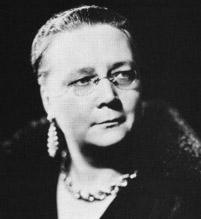
And here is Dorothy L. Sayers with Eric the Skull:

Tory Historian was engaged in a discussion about the author of what might have been the earliest collection of railway detective stories by V. L. Whitrechurch and decided to find the book, having read several though not all of those adventures. As ever, London Library came up trumps and there, on the right shelf, was the 1977 reprint with a highly informative introduction by Bryan Morgan of Stories of the Railway, which is, as it happens, available on Gutenberg Australia under the original title of Thrilling Stories of the Railway.

Before TH moves to a discussion of the two titles, the collection as a whole and of its astonishing author, let us look at the curious conundrum raised by Bryan Morgan (himself a railway enthusiast, author of books on the subject and editor of The Railway Lover's Companion as well as of an exellent collection, entitled Crime on the Lines):
The nexus between railways and the clergy (today including at least two bishops, and extended to include such fringe churchmen as organists) has been often remarked upon but never fully explained. Should one, for instance, accept the view of a current professor of scripture that the organisation of a railway is a microcosm of God's organisation of the universe, or agree with that vicar and author of popular children's books who claims that despite their faults the railways and the church are the best ways of transporting a man to his final destination? Or should one look to the late Canon Roger Lloyd's opinion that railway-lore is 'morally good in the sense that it healthily occupies the mind and so becomes a subsidiary and indirect cause of that self-forgetfulness which is at the root of all virtue'?

Certainly, though, the clerical or lay enthusiast of the early years of the present century was a happy man; for Britain's railways were then at their peak of glory. 'Brief years, from the death of Queen Victoria to the outbreak of war', as Mr Hamilton Ellis has written, 'were proud years. Enormous coal-trains rumbled and handsome expresses rushed about the country. Maintenance was high and locomotives were often painted in gorgeous colours.' Bradshaw ran to nearly 1200 pages (a figure never preceded or exceeded) and in many a country rectory stood as a work of reference beside Crockford's. Numerous parsons stumped while drafting a sermon must have relaxed intellectually by working out the quickest route between Saxmundham and Blisworth.
Most certainly there is a link between railways and spy stories, at least those of that period as well as detective ones. But why the clergy should find itself so enamoured with trains and all matters to do with them remains a mystery and if Bryan Morgan cannot solve it, nobody can.

Whitechurch was an astonishingly prolific author of detective and other novels and short stories as well as books of topography and autobiography. As Mr Morgan says, his duties in the Church could not have been particularly onerous.

His knowledge of the railways seems to have been outstanding and several of the short stories have pages of incomprehensible detail about the various activities, which does not, oddly enough, detract from the actual plots that are usually very straightforward, sometimes of the detective, sometimes of the thriller variety.

Nine of the fifteen are concerned with the activities of the "first railway detective" as acknowledged by no less an authority as Ellery Queen and Dorothy L. Sayers, Thorpe Hazell, who shares his creator's knowledge of trains and railways but is also something of a diet and exercise weirdo. TH has wondered idly whether Mrs Ariadne Oliver's creation, the vegetarian Finn, Sven Hjerson might not have been influencd by the character of Thorpe Hazell, though the latter sticks to a seriously unhealthy diet of milk, lentils, macaroni and Dutch cheese with nary a piece of fruit or vegetable. He also eats Plasmon biscuits and chocolate and does quite ridiculous exercises before and after meals. But give him a problem such as how to stop a German messenger from taking a stolen document out of the country or how to ensure that an important diplomatic meeting takes place or what happened to a valuable picture and, indeed, the carriage it was in and Hazell is in his element.

There are also six non-Hazell stories and these are all thrillers with the villains ranging from German agents to Russian police officials and violent union leaders. All in all, quite interesting but not altogether thrilling. According to Bryan Morgan, the British Library catalogue renamed the collection from Thrilling Stories of the Railway to just Stories of the Railway, and that is how they were reprinted in 1977. As indicated above the Australian on-line version restores the original title as did the BBC when it recorded Benedict Cumberbatch reading inexplicably abridged versions of the stories.

… than the detective novels of the so-called Golden Age, that is the twenties and thirties. To be perfectly honest, even Tory Historian finds many of them a tad tedious but they have their virtues. The one under discussion is “Colonel Gore’s Second Case” by Lynn Brock (real name Alexander McAllister but also wrote under the name Anthony Wharton), once a very well known and popular writer of detective stories, now barely remembered.

Willard Huntington Wright (otherwise S. S. Van Dine) thought Colonel Gore to be “ponderous and verbose”. Then again, most readers think that the precious hero of Van Dine’s novels, Philo Vance, needs, as Ogden Nash so aptly put it, “a kick in the pance”.

Dorothy L. Sayers was more charitable in her famous Introduction to the “Great Short Stories of Crime, Mystery and Horror”, published in 1928 and Marjorie Nicolson, the eminent academic and the author of a wholly delightful essay, “The Professor and the Detective”, published in Atlantic Monthly in 1929 says:

There is the amateur Colonel Gore, who began his career by a chance application for a golf secretaryship, and has now opened his private inquiry office – a movement which his admirers greet with pleasure, as promising an indefinite number of cases for the future.
This is not entirely accurate as the book which starts with Colonel Gore applying for that secretaryship and ends with him opening the private inquiry office is the second one, the book mentioned in the first paragraph, in fact. But there were, indeed, several further adventures.

The book is certainly well written though the plot is over-elaborate; there are two whole maps to delight Tory Historian’s heart but it cannot be said that they are at all helpful in following our hero’s movements around the specified area.

The novel is, naturally enough, extremely conservative in its attitude to social mores and to moral certainties. The latter is a prerequisite to any good detective story. Murder, the crime of the modern detective tale, is not just wrong, it is wrong on a cosmic scale. Morality has to be restored and the murderer apprehended, though it is true that on various occasions said murderer is allowed to take his own way out (i.e. suicide) if the victim is judged to be a real bad ‘un, usually a blackmailer.

On at least one occasion Roger Sheringham lets the murderer off completely on the grounds that the vile chap who had blackmailed and tormented women deserved what was coming to him. But that does not condone murder, merely accepts that there are extreme circumstances that need extreme measures. One does not need to condone war to accept that sometimes it is inevitable and, probably, necessary.

Then there is the curious circumstance of a gentleman, in this case Colonel Gore, being able to ask questions from anyone and not told to mind his own business; at worst he has to dispense largesse in the form of half-crowns or sovereigns, depending on the recipient.

The press are not seen much in this novel but what we know of them is that they cannot be allowed to share space with decent folk. That, oddly enough, is a continuing theme in detective novels even when the investigator is a journalist. Then it is other journalists and, particularly, editors and newspaper proprietors that are scum.

The local police are consistently stupid though honest and not venal. Even when the investigator is from the Yard, that remains true. If he is an amateur as Colonel Gore is, the invincible stupidity of the local constabulary is almost a given, though the reader has to suffer through many examples.

In a typically entertaining essay, “Murder at $2.50 a crime”, the great Canadian humorist, Stephen Leacock, wrote:
So there is the story away to a good start – Sir Charles’s Body found next morning by a “terrified” maid – all maids are terrified – who “could scarcely give an intelligent account of what she saw” – they never can. Then the local police (Inspector Higginbottom of the Hopshire Constabulary) are called in and announce themselves “baffled”. Every time the reader hears that the local police are called in he smiles an indulgent smile and knows they are just there to be baffled.
In “Colonel Gore’s Second Case” the local police are worse than baffled – they are convinced they know who the murderer is in at least one crime and can hardly bear to give up their conviction even when the man in question is found heavily drugged and hidden in a subterranean chamber.

Meanwhile various members of a fabulously wealthy family keep meeting apparently violent ends and nobody in any constabulary thinks “’ullo, ‘ullo, ‘ullo, wot ‘ave we ‘ere?”. To be fair, neither does the coroner or the gentlemen of the press or the remaining members of the family (though, naturally, some of them have very good reasons for insisting that the deaths are unconnected) and even Colonel Gore spends some time being baffled and bewildered.

Colonel Gore also finds himself led badly astray by an obvious red herring in the shape of a very brightly coloured golf sweater and an abandoned monogrammed golf ball. Tsk, tsk. Every tyro reader can see what those clues signify but not Colonel Gore or, at least not till the last twenty pages of the actual story. (After which there are many pages of explanation as the entire plot had been too complicated to understand at first reading.)

It is interesting how often that contempt for local police or, rather “village bobbies” crops up even in modern detective stories. In Caroline Graham’s “Faithful unto Death” Chief Inspector Tom Barnaby is irritated by the gentle village policeman and allows his sergeant to bully him mercilessly. In fact, he contemplates moving the unfortunate chap to a tougher district, which would probably break him and deprive the villages of their much liked bobby.

In the end he realizes that his own mistakes in the investigation are far worse because of his greater experience. He never learns that the bullying had prevented information from being passed on that would have put him on the right track and saved one person from being killed. The attitude remains but the surrounding facts have become more complicated. The detective hero has never been infallible, as Colonel Gore proves but these days the mistakes are more serious.

Conservative in moral and social attitudes books like “Colonel Gore’s Second Case” might be but in one respect they are anything but that. There is no assumption about who might or might not be the killer.

The local constabulary may not like interviewing robustly members of an important, let alone landed gentry, family and are horrified at the thought of suspecting any member of it. But the reader and the detective hero know that crime knows no class boundaries – anyone could have done it and usually did.

One can pick up very interesting and somewhat random information from detective stories. Tory Historian was re-reading Dorothy L. Sayers' novels and, indeed, reading her essays. One of the early Wimsey novels was The Unpleasantness at the Bellona Club, whose plot revolves round the problem of who died first, General Fentiman or his sister Lady Dorland.

The General's body is discovered in the Bellona Club in the early evening of November 11. Wimsey is asked to find out when he had died but immediately discovers a number of odd facts. He cannot find a single club servant who had seen the general come in on the morning of that day. But there is something else.

Wimsey looks at the general's clothes as sent back to his flat and is surprised to find something missing: a poppy. It is inconceivable, he argues correctly, for someone like General Fentiman to walk about on November 11 without a poppy. However, it is obvious that he does not expect the general or, presumably, anyone else to be wearing a poppy on November 10. Clearly, the habit of wearing the poppy for weeks before actual Remembrance Day developed somewhat later than 1928.

Powered by Blogger.

Followers

Labels

Counters


Blog Archive