
The Codebreaker Girls – Only 99c!
2 months ago


In one of his administrative rather than military phases, the first consul predicted that the Code Napoléon would be remembered long after his victories were forgotten. In the Prussian Rhenish provinces the Code lasted until 1900, and it still forms the basis of much of European jurisprudence today, a legal system that has already established its legislative primacy over British domestic law-making. As the authors of the 1993 edition of the legal textbook French Administrative Law point out: 'Napoleon may perhaps be thought of as the principal .... inspiration of the European Court [of Justice], which is itself buttressed by the principles of administrative law that his own institution, the Conseil d'Etat, has evolved during the last 190 years.Well, up to a point as Mr Roberts might admit today. (The book was published in 2001.)
Napoleon's programme, of a politically united Europe controlled by a centralised (French-led) bureaucracy, of careers open to talent and of a written body of laws, has defeated Wellington's assumptions of British sovereign independence, class distinctions and the supremacy of English common law based upon established, sometimes ancient, precedent. 'I wished to found a European system, a European code of laws, a European judiciary,' wrote Napoleon on St Helena. 'There would be but one people in Europe.' There is some irony in the fact that Waterloo was fought a mere twelve miles from Brussels, the capital of today's European Union. For, although Wellington won the battle, it is Napoleon's dream that is coming true.
 First, I have to report that yesterday I went to the National Film Theatre to see a rarely (well, hardly ever) shown British film The Reluctant Widow, based on one of Georgette Heyer's Regency novels. Both Wikipedia and IMDB give a bizarre misinterpretation of what happens in the film, even calling the heroine Helena when she is Elinor. It is a little perplexing why anyone should put up a plot summary of a film they had not seen or know anything about. The summary of the book's plot shows that the film kept close to it with a few changes, some of which work and some of which are superflous.
Georgette Heyer disliked all that she heard about the film or saw when it was being made and she refused to see the finished product or sell the film rights ever again. That is a great pity as her books really cry out for dramatization. The film had all the Heyer atmosphere and characteristics as well as being highly entertaining (as are the novels). In addition, and Miss Heyer would have appreciated this, it is meticulously researched as far as design, clothes, uniforms, architecture and views of London is concerned. The Art Director responsible for that was Carmen Dillon, a woman of great stature who made her name in what was then a man's world, was the Art Director on some of the best known British films like The Importance of Being Earnest (for which she won the Best Production Design Award in Venice) and Richard III as well as winning the Oscar for the Art Direction of Hamlet, the first woman ever to do so.
The plot, which revolves round espionage during the 100 Days with an urgent despatch to the Duke of Wellington in Brussels stolen in London and having to be retrieved by the hero and, as it turns out, the heroine, inevitably takes one back to the subject of Waterloo. (Though, it would seem that the book's plot is about Wellington's plan to march in the Peninsula in 1813. Unquestionably, I shall have to read the book.)
Fortunately, there are many events and exhibitions that have to do with the anniversary and an excellent one is a free exhibition at the National Portrait Gallery, entitled Wellington: Triumphs, Politics and Passions.
As one would expect, much of the exhibition revolves round various portraits from very early ones to the famous 1844 daguerreotype. One of the big draws is the panoramic view of Wellington's state funeral in 1853 by Henry Alken and George Augustus Sala, which will be displayed in full for one hour on Thursday, June 18. At present one can see sections of it in the display case and in full on the screen above.
The funeral was watched by an estimated million and a half people and, as the notes say, reminded people of Wellington's days of glory, the somewhat more ambiguous record as a Prime Minister having been forgotten. One can draw certain parallels with the Churchill funeral of just over fifty years ago, as this blog wrote about it on the day of the anniversary. There is one important difference between the two farewells, both to great men, both symbols of their age: Wellington's victory in 1815 ushered in an age of British supremacy in the world in matters political, economic and ideological; Churchill's victory in 1945 saw the end of that age. Farewell to him was also a farewell to that.


It is Waterloo year, the first that can be fully celebrated since the year itself as 1915 was hardly a time for celebrations. Tory Historian has been doing various things: going to the National Portrait Gallery exhibition about the great Duke, watching a poor play performed with great zest in a Regency toy theatre in the British Museum where there is an exhibition about propaganda for and against Bonaparte and, as of yesterday, re-reading Andrew Roberts's wonderfully well written Napoleon and Wellington.
Mr Roberts has more recently written an admiring biography of the Emperor but he is also something of an admirer of the Duke. The people he has little time for are the Whigs and this is what he has to say about them:
The exaggerated loathing of the Whigs for the man who threatened and finally defeated their idol Napoleon was to be a constant feature throughout Wellington's career. They emerge from their story not as witty, brilliant, big-hearted Olympians of politico-social mythology, but as quotidian, nit-picking, mean-minded quasi-traitors.Tory Historian has had a number of heated discussions with people who appear to believe seriously that the Whigs were somehow more democratic and more concerned with the fate of the common people than the Tories. They were mostly concerned with power that they wanted to and often did see in their own hands. Their attitude to the French Revolution once the heady early days gave way to state terror and oppression is extraordinary by any standard and their attitude to France once it became Britain's clear enemy verges on bizarre or, as Mr Roberts, treacherous.
Tory Historian salutes the great Duke of Wellington, whose birthday it is today. As he was born in 1769, this is not a particularly notable anniversary (345 years) but worth remembering.
On to another Conservative politician, Lord Curzon. Tory Historian was re-reading David Gilmour's biography of the great man and came across the following paragraph in the chapter about his Oxford years when he began to establish in his own mind what he wanted to do in life:
Curzon was never a political intellectual. He cared for the display and workings of politics, for oratory, statesmanship, the practice of government. He was not much interested in Tory philosophers. Hume and Burke interested him far less than Pitt or Canning. Principles were more important the ideas and efficient administration more important than either.TH cannot help wondering how many politicians actually understand the difference between those concepts.

Having acquired a share in L. J. M. Daguerre's invention, he was one of the first to practice daguerreotype portraiture in England, and he improved the sensitizing process by using chlorine (instead of bromine) in addition to iodine, thus gaining greater rapidity of action. He also invented the red (safe) dark-room light, and it was he who suggested the idea of using a series of photographs to create the illusion of movement. The idea of using painted backdrops is also attributed to him.It looks like the photograph of the Duke of Wellington was taken at the studio behind St Martin's in the Fields. There were several subsequent paintings and etchings of the Duke made from Claudet's photograph but none of them are quite as good as the original. As it says on Iconic Photos:
From 1841 to 1851 he operated a studio on the roof of the Adelaide Gallery (now the Nuffield Centre), behind St. Martin's in the Fields church, London. He opened subsequent studios at the Colosseum in Regent's Park (1847–1851) and at 107 Regent Street (1851–1867).
The photo itself taken in 1844 was a remarkable bridge across centuries. Memories of Elizabeth the First or the English Civil War were as fresh and recent to Wellington (born 1769) as Wellington or Lincoln is to us. The photo was different from latter paintings and engravings based upon it — unlike the kindly old man which smiled down from the paintings, the photo showed a crankier, more determined Wellington — a face you truly expect from the Victor of Waterloo.


 The Duke of Wellington, one of Tory Historian's heroes was a considerably more important politician (as well as an overwhelmingly important military commander) than TH had been led to believe at school. He was also a man who was admired unstintingly by all except the Radicals (and even they inclined to some admiration).
Sadly, none of that is true and Tory Historian needs to rethink everything read in those textbooks and heard in the lessons. It would appear that the Duke did have a great deal of political aptitude and a very good understanding of European affairs as well as a great fear (like most military men) of another European war. He was central to British politics for many years after Waterloo and went on serving as a public servant almost until the day of his death. Many of his political judgements were considerably more intelligent and penetrating than those of people on the other side who were the heroes of those long-ago school lessons.His funeral on November 18, 1852 "caused as much of a stir in the mass media of 1852 as did Sir Winston Churchill's in the middle of the twentieth century". This link will lead to a list of references and illustrations in contemporary Illustrated London News. Here is a brief account of the funeral - it was the last heraldic state funeral held in Britain.
 Tory Historian has finished reading Earl Stanhope's Conversations with Wellington (mentioned here and here) and, having recently read John Charmley's biography of Princess Lieven (here and here) could not help spending some time in meditation about the Duke of Wellington's role as politician.
The famous quotation from Henry IV Part II (Act III, Scene 1, since you ask) refers both to the difficulties a ruler faces that his subjects know nothing about and, more specifically, to the difficulties a usurper faces. Both Henry IV and Henry V (particularly on the eve of the battle of Agincourt) are unhappily aware of the fact that the crown was acquired in a somewhat nefarious fashion.
O God of battles! steel my soldiers' hearts;
Possess them not with fear; take from them now
The sense of reckoning, if the opposed numbers
Pluck their hearts from them. Not to-day, O Lord,
O, not to-day, think not upon the fault
My father made in compassing the crown!
Let us now move to another country and another century. Tory Historian has been enjoying Earl Stanhope's Conversations with Wellington. Some of the notes refer to little more than day to day chats and gossip. Without knowing the people concerned directly they are of little interest and some of the comments are so mundane that they should have been ignored, except for the fact that Stanhope clearly thought that every word the Duke had uttered and he could recall would be of interest to succeeding generations. However, among all that trivia, which is, one must admit, often amusing, there are some highly interesting comments and stories from the Duke, about the Peninsular campaign, about Waterloo, about the country as he saw it and about Napoleon of whom he often spoke with great praise.
In October 16 1837 Lord Mahon (as Stanhope then was) met the Duke hunting and immediately plunged into a long conversation, the chief part of which was, apparently, political and was not, therefore, noted down (more's the pity). Eventually, the conversation turned to Napoleon's Russian campaign and a discussion whether there could have been other decisions the Emperor could have taken and remained victorious in Russia.
The plan I have seen suggested in Ségur's history of the campaign, and ascribed I think to Count ------, was to winter in Moscow and intrench himself, allowing his communications with France to be cut off?And all because that head lay uneasy. The soldiers and officers may have been devoted to him but he could never be certain of the rest of the country.
'He couldn't have done that. You know that when he heard of Mallet's conspiracy at Paris, he said, 'This would not matter to me if I were a Bourbon, but as it is I must endeavour to return directly. In fact, if you look through his campaigns you will find that his plan was always to try to give a great battle, gain a great victory, patch up a peace, such a peace as might leave an opening for a future war, and then hurry back to Paris. This I should say was the great benefit of what we did in Spain - of what we did and enabled the Spaniards to do. We starved him out. We showed him that we wouldn't let him fight a battle at first, except under disadvantages. If you do fight, we shall destroy you; if you do not fight, we shal intime destroy you still.'
 Tory Historian spent a good deal of today within the Victorian sphere. First a visit to the newly reopened Leighton House Museum, once home of Frederic, Lord Leighton RA, the only artist to have been ennobled. Sadly, he did not have children so the title died with him.
 Another book was the 1998 reprint of the fifth Earl of Stanhope's Conversations with the Duke of Wellington. This counts as Victorian history as the conversations took place between 1831 and 1851, the Duke's death.
Stanhope's chief achievements were in the fields of literature and antiquities. In 1842 took a prominent part in passing the Literary Copyright Act 1842. From the House of Lords he was mainly responsible for proposing and organising the foundation of the National Portrait Gallery, London in 1856. A sculpted bust of Stanhope holds the central place over the entrance of the building, flanked by fellow historians and supporters Thomas Carlyle and Lord Macaulay. It was mainly due to him that in 1869 the Historical Manuscripts Commission was started. As president of the Society of Antiquaries (from 1846 onwards), he called attention in England to the need of supporting the excavations at Troy. He was also president of the Royal Literary Fund from 1863 until his death, a trustee of the British Museum and founded the Stanhope essay prize at Oxford in 1855. He was elected a Fellow of the Royal Society in 1827.Apart from all this he managed to write a number of serious historical works as well as his notes on the conversations with the Duke. The question really is why has nobody written a biography of this outstanding politician and historian?
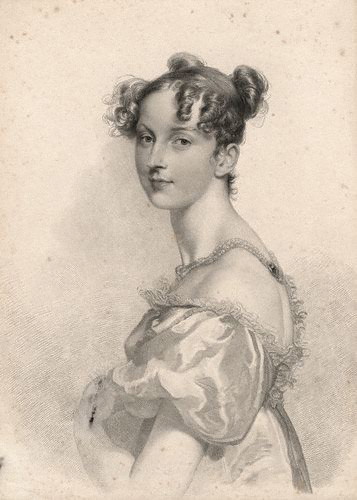 It is curious how much fuss there is about the possibility, however remote, of foreign lobbying having some influence on British politics. By foreign Tory Historian does not mean the European Union, whose legislation is British legislation, but countries and organizations outside it.
Yet in the days of Princess Lieven such influence and interference was taken almost for granted, if somewhat resented. Indeed, it was resented a good deal more towards the end of her stay in Britain as the Russian ambassadress or, rather, the extremely active wife of the Russian ambassador, than at the beginning of it.
Professor Charmley’s book, which Tory Historian has finished, details a number of instances. When George Canning became Foreign Secretary after Castereagh’s suicide in 1822 the Duke of Wellington found himself considerably out of sympathy with the new foreign policy and unhappy about the role he had been made to play at the Congress of Verona. Castlereagh had managed to keep the Continental powers happy through his obvious sympathy with the idea of affairs being run by a system of congresses though he always managed to steer clear of any direct involvement, pleading the need to placate Parliament and the people.
Canning was made of different stuff and his immediate aim seemed to be to break up the Congress system. Wellington, who, like most military men, dreaded the thought of another war, thought Canning’s policy was likely to lead to one. Princess Lieven found the same policy unhelpful to Russia and to Austria (at that time in close alliance, not least through her relationship with Metternich) so she persuaded the Duke to show the Cabinet dispatches on Spain, where there was a revolution brewing, to her, her husband and the Austrian ambassador. The Duke may not have been particularly happy with that idea but as he was even less happy with Canning’s foreign policy, he saw nothing terribly wrong with that. He had to prove that the Cabinet was not in agreement with the Foreign Secretary. Eventually, Canning’s policy became more helpful to Russia. Indeed, over the Greek rebellion against the Ottomans, he may have gone too far in agreeing to Russian intervention. Canning did not live long enough to have to deal with the outcome of his policy and it was the Duke of Wellington, now Prime Minister, who had to face the ever growing power and, in the shape of the Princess Lieven, insolence of Russia.
She, for herself, realized that the Duke was unsympathetic and intrigued mercilessly against him, not just in her letters to her brother Alexander Benckendorf, Nicholas I’s head of secret police and Count Nesselrode, the foreign Minister, but in constant communication and plotting with the leaders of the opposition, Earl Grey and Viscount Palmerston. Again, they apparently saw nothing wrong in conducting domestic politics through the medium of a foreign power’s representative, though an unofficial one.
Indeed, matters went so far as to make the Princess Lieven one of Earl Grey’s advisers when he was putting together his Cabinet in 1830. Indeed, she claimed to have been the person who got Palmerston his position as Foreign Secretary. The Belgian imbroglio turned Grey and Palmerston against the Russians and the Princess now set herself the task of getting rid of the latter in order to have a more pro-Russian British Foreign Secretary. She failed because she underestimated Palmerston (not the first nor the last person to do so). The outcome was the Lievens’ departure from London back to St Petersburg, a place she hated, being more of a fervent Russian patriot when she was out of that country.
It is possible that this sort of meddling could be done only by a person who had Dorothea Lieven’s peculiar combination of charm, intelligence and bare-faced cheek but there is, nevertheless, something odd in the notion that the wife of a foreign ambassador, herself extremely active, should have so much say in British domestic politics.
 ... to all the many tens of thousands of words that have been written about the Iron Duke, the general who led the armies to victory at Waterloo, the man whose bon mots most of us can quote: the Duke of Wellington (1769 -1852).
Although there is some doubt about the exact day of his birth and the BBC prefers the old and extremely inexact information of "early in May", historians now tend to agree that it was April 29. So, let us celebrate the great man today.
Let us recall two of his memorable sayings. The first is one that every commander should have inscribed permanently on his brain:
The whole art of war consists in getting at what is on the other side of the hill.The second is probably the first comment, supposedly made by the Duke of Wellington, that Tory Historian ever read back in the days when schools actually taught history. Looking at the post-Reform Act House of Commons, the Duke is supposed to have said:
I never saw so many shocking bad hats in my life.They have not become any better.
