

The Codebreaker Girls – Only 99c!
2 months ago
 The poet, essayist, MP, irascible Catholic, Hilaire Belloc was born on July 27, 1870 in France but became a British subject in 1902.
 As this is the Conservative History blog, perhaps one should stick to the political poems, few of whom are better than Lord Lundy [scroll down], who
from his earliest yearsWell, we know what happened to Lord Lundy:
Was far too freely moved to Tears.
It happened to Lord Lundy then,It was that terrible tendency to be far too freely moved to tears.
As happens to so many men:
Towards the age of twenty-six,
They shoved him into politics;
In which profession he commanded
The Income that his rank demanded
In turn as Secretary for
India, the Colonies, and War.
But very soon his friends began
To doubt is he were quite the man:
They let him sink from Post to Post,What could be more conservative and, therefore, anti-utopian and anti-political than Belloc's famous quatrain about an election:
From fifteen hundred at the most
To eight, and barely six--and then
To be Curator of Big Ben!. . .
And finally there came a Threat
To oust him from the Cabinet!
The Duke -- his aged grand-sire -- bore
The shame till he could bear no more.
He rallied his declining powers,
Summoned the youth to Brackley Towers,
And bitterly addressed him thus--
"Sir! you have disappointed us!
We had intended you to be
The next Prime Minister but three:
The stocks were sold; the Press was squared:
The Middle Class was quite prepared.
But as it is! . . . My language fails!
Go out and govern New South Wales!"
The accursed power which stands on PrivilegeReaders of the blog may well have other favourites. They are welcome to post them.
(And goes with Women, and Champagne and Bridge)
Broke and Democracy resumed her reign:
(Which goes with Bridge, and Women and Champagne)
Since the sixtieth anniversary of the beginning of the Korean War (too often forgotten by commentators) was marked by Tory Historian, it is worth pointing out that it ended on July 27, 1953 with the signing of a peace agreement at Panmunjom. It lasted three years and cost around 5 million lives.
... a very interesting looking book by David Torrance, a previous contributor to the Conservative History Journal, about Noel Skelton and property-owning democracy. Once I have read it I shall try to interview David for the Journal or the blog.
 Tory Historian remembers this very well, indeed. One of the great non-events of the year, for which we may be thankful, though questions were raised at the police handling of the planned but failed second series of blasts on the London tube.
Tory Historian returns with a round-up of recent finds in the historical and archaeological world.
Of greatest interest to TH is this collection of Victorian photographs of golfers playing at St Andrews.
Ladies are pictured wearing enormous frocks and wielding their clubs while spectators look on.The album was auctioned on July 13 by Mullock's Auctioneers at St Andrews as part of a Golfing Memorabilia sale.
The women were playing for the Ladies' Monthly Medal in September 1884 and the clubhouse can be seen in the background.
The distinctive sandy beach is also shown in some of the snaps of the course that will host the Open Championship later this week.
Other photographs show a match played between a pair of "strangers" and two locals.
 Now we need to move further back in history and in the news items. On July 5 it was reported that the earliest illustrated Bible has been found in an Ethiopian monastery and is being preserved by a British charity, the Ethiopian Heritage Fund.
recently unearthed a clay fragment dating back to the 14th century BCE, said to be the oldest written document ever found in Jerusalem.It is, indeed, a fragment but its historical significance may well turn out to be very big, indeed.
The minuscule fragment contains Akkadian words written in ancient cuneiform symbols. Researchers say that while the symbols appear to be insignificant, containing simply the words “you,” “you were,” “them,” “to do,” and “later,” the high quality of the writing indicates that it was written by a highly skilled scribe. Such a revelation would mean that the piece was likely written for tablets that were part of a royal household.That is not all. Nearer home, a huge treasure trove of more than 52,000 coins dating from the third century AD was found by that ever-useful person, a man with a metal detector near Frome in Somerset. Admittedly, the actual find was made in April but it has only just been announced because archaeologists from the British Museum have been working through it and local officials have been making comments about how wonderfully well the scheme they had set up for the finding of local treasures has been working.The find was uncovered in a fill taken from the Ophel area, which lies between the Old City’s southern wall and the City of David. The Ophel digs are being carried out by Dr. Eilat Mazar of the Hebrew University Institute of Archeology, through funding from US donors Daniel Mintz and Meredith Berkman of New York.
According to Mazar, the fragment was discovered over a month and a half ago during wet sifting of the Ophel excavations, but was only released to the press this week because researchers wanted to wait until analysis of the piece was complete so as to be absolutely certain of the details of the find.
The most ancient piece of writing found in Jerusalem before the Ophel fragment was a tablet unearthed in the Shiloah water in the City of David, dating back to the eighth century BCE – nearly 600 years “younger” than the Ophel find.
The remains of a thousand years of maritime trade, as well as the products of dozens of wars, are crumbling in the mud and silt at the bottom of the Baltic Sea. In addition to items with great cultural and historical value, the depths conceal the rusting remains of poison gas grenades, high explosive shells and aircraft bombs, all of which represent obstacles to pipeline construction. "It was not an easy situation," says Nord Stream spokesman Steffen Ebert. "We were under considerable time pressure."The Baltic Sea can yield all sorts of interesting objects, even champagne. Swedish divers found about 30 bottles of 220 year old bubbly in a shipwreck off the Island of Aaland.
 The Battle of Britain began on July 10, 1940.
The day was characterised by convoy raids off North Foreland and Dover. During the night, the east coast, home counties and western Scotland were attacked. The weather was showery in the southeast and Channel, with continuous rain elsewhere.Germany was not really in a position to invade though people may be forgiven for thinking so at the time. The Battle of Britain was the first real set-back for the German forces. Let us not forget the non-British who took part in it, particularly the Poles who were not allowed to take part in the Victory Parade fly-past in 1946.

Tory Historian was intrigued to find this quotation from the Economist of May 3, 1845 on the subject of Sir Robert Peel's Bank Charter Act:
It is because we feel strongly that the interference of Parliament, under the pretext of supplying prudence, and regulating the interests and responsibilities of commerce in any way, has always proved a serious failure, and a miserable substitution for that individual caution which it is so well calculated to supplant, that we feel bound to oppose such legislation generally. And particularly so in the present instance, because we believe that the means proposed are calculated to have an opposite tendency: to endanger more the solvency of banks, and very materially and unnecessarily to aggravate the evils arising from commercial revulsions and adverse exchanges, to which a great commercial country must ever be less or more subject.Tory Historian cannot help wondering whether such words could appear in any media outlet today.
This may come a little too late for some people but I did put up the information a few days ago. The Conservative History Group will be having a meeting today.
The forgotten war, as it is known, especially in Britain, began on June 25, 1950 when North Korea invaded South Korea. Astonishingly enough, it was the UN that mobilized forces to support South Korea but then the USSR was temporarily exercising an empty seat policy. Undoubtedly, it would have stopped any UN action, otherwise. According to recent books on the subject of Soviet espionage in the United States, Soviet penetration of the Manhattan Project, which allowed Stalin to build an atom bomb considerably faster than anyone had expected also enabled him to give North Korea the go-ahead for its invasion. The picture is being republished with the full consent of the Department of Defence. Their policy is to allow all reproduction of photographs that is their property. It is of Pfc. Julias Van Den Stock of Company A, 32nd Regimental Combat Team, 7th Infantry Division with M1 or M2 Carbine, resting on a Chinese Communist bunker with a Soviet DP light machine gun, along the slope of Hill 902 north of Ip-Tong.
Just to complete the posting here is the beginning of what, in Tory Historian's opinion, is the best film about the Korean War: The Manchurian Candidate.
The death has been announced of Lord Walker who, as Peter Walker, held a number of important ministerial positions in both the Heath and the Thatcher governments. Tory Historian may find the notion of a "one-nation Conservative" a little odd but at times like this, all one can do is remember.
 Tory Historian has finished reading Earl Stanhope's Conversations with Wellington (mentioned here and here) and, having recently read John Charmley's biography of Princess Lieven (here and here) could not help spending some time in meditation about the Duke of Wellington's role as politician.
It was not so long ago that I discussed with a regular contributor to the Conservative History Journal the paucity of Robert Peel biographies. Well, sometimes you wait for ages and then several come at once.
In 2007 we had Douglas Hurd's Sir Robert Peel: A Biography and today the postman delivered Richard Gaunt's new book that I have mentioned in a previous posting. More about it as I read it but as a taster, here is a quotation from Richard Gaunt's musings about Peel's reputation:
At the start of the twenty-first century, we remember Peel for breaking down what he built up (notably his 1842 Corn Law and, more controversially, the Conservative Party itself) or amending what he found (for example, in Ireland and at the Home Office) as well as for the unintended consequences of some of his achievements (not least in respect of the Income Tax and Bank Charter Act). from his youth, Peel was offered up on the altar of Pittite pieties to the future service of the nation. To that extent he has become party of the heroic genealogy of politcal leaders stretching thenceforth from the Younger Pitt by way of Canning down to Gladstone and the triumph of a progressive strand of Conservatism, and/or conservative strand of Liberalism. To designate him a false 'Tory', a renegade 'Conservative', a 'Liberal Tory', a 'Liberal Conservative' or a proto-Gladstonian Liberal, is to play, semantically, with the career of a shrewd, ambitious and complex political operator and try and give it helpful characterisation within a sometimes limited politicla vocabulary. Peel's own outlook and views combined a rigid adherence to certain fixed principles - his Protestantism, his executive outlook, his attachment to Bullionist theory and his growing commitment to the tenets of Free Trade - within an overall process of self-education as to the means of furthering them.As they used to say in examination papers: discuss.
 The Battle of Waterloo - the final battle of the long Napoleonic wars that engulfed Europe taking over from the Revolutionary wars before that. It resulted in a comprehensive defeat for Napoleon who left the battle field knowing (whatever he may have dreamed later) that he would now have to go into real exile and stay there.

 The Daily Telegraph (prototype of Peter Simple's Feudal Times and Reactionary Herald - those were the days) has published what was undoubtedly the most exciting news of the day: the bones of the female skeleton found in a grave near Magdeburg two years ago do appear to be those of Queen Eadgyth, grand-daughter of Alfred the Great, wife of the Holy Roman Emperor Otto I and sister of King Athelstan "became the first official King of England after unifying Saxon and Celtic kingdoms after the battle of Brunanburgh in 937 AD".
The Conservative History Group, which has a new Director in the person of Nigel Fletcher, will be holding its first post-election meeting.
Tuesday, 29th June at 6.30pm
Venue: The Grimond Room, Portcullis House
Our speaker will be Dr Tim Bale of Sussex University, whose book The Conservative Party from Thatcher to Cameron was published earlier this year. With Mr Cameron now in Downing Street, it is an opportune moment to consider the recent history of the Party, and we will be joined in doing so by our Chairman, Keith Simpson MP, and by ConservativeHome’s Co-Editor Jonathan Isaby.
 Tory Historian returned to the excellent National Portrait Gallery exhibition, The Indian Portrait. It is free and will not be closing till this coming Sunday. It is thoroughly to be recommended for the wonderful pictures as much as the explanation of various developments - enough to give one some idea of how matter stood in various princedoms, politically and artistically; of the Mughal influence; and of the British one - but not enough to make one's head spin. Of course, those who already know the history in some detail will find the explanations superficial but, Tory Historian hopes, the art superlative.


The famous quotation from Henry IV Part II (Act III, Scene 1, since you ask) refers both to the difficulties a ruler faces that his subjects know nothing about and, more specifically, to the difficulties a usurper faces. Both Henry IV and Henry V (particularly on the eve of the battle of Agincourt) are unhappily aware of the fact that the crown was acquired in a somewhat nefarious fashion.
O God of battles! steel my soldiers' hearts;
Possess them not with fear; take from them now
The sense of reckoning, if the opposed numbers
Pluck their hearts from them. Not to-day, O Lord,
O, not to-day, think not upon the fault
My father made in compassing the crown!
Let us now move to another country and another century. Tory Historian has been enjoying Earl Stanhope's Conversations with Wellington. Some of the notes refer to little more than day to day chats and gossip. Without knowing the people concerned directly they are of little interest and some of the comments are so mundane that they should have been ignored, except for the fact that Stanhope clearly thought that every word the Duke had uttered and he could recall would be of interest to succeeding generations. However, among all that trivia, which is, one must admit, often amusing, there are some highly interesting comments and stories from the Duke, about the Peninsular campaign, about Waterloo, about the country as he saw it and about Napoleon of whom he often spoke with great praise.
In October 16 1837 Lord Mahon (as Stanhope then was) met the Duke hunting and immediately plunged into a long conversation, the chief part of which was, apparently, political and was not, therefore, noted down (more's the pity). Eventually, the conversation turned to Napoleon's Russian campaign and a discussion whether there could have been other decisions the Emperor could have taken and remained victorious in Russia.
The plan I have seen suggested in Ségur's history of the campaign, and ascribed I think to Count ------, was to winter in Moscow and intrench himself, allowing his communications with France to be cut off?And all because that head lay uneasy. The soldiers and officers may have been devoted to him but he could never be certain of the rest of the country.
'He couldn't have done that. You know that when he heard of Mallet's conspiracy at Paris, he said, 'This would not matter to me if I were a Bourbon, but as it is I must endeavour to return directly. In fact, if you look through his campaigns you will find that his plan was always to try to give a great battle, gain a great victory, patch up a peace, such a peace as might leave an opening for a future war, and then hurry back to Paris. This I should say was the great benefit of what we did in Spain - of what we did and enabled the Spaniards to do. We starved him out. We showed him that we wouldn't let him fight a battle at first, except under disadvantages. If you do fight, we shall destroy you; if you do not fight, we shal intime destroy you still.'
 Whatever John Constable's political views might have been his vision of the country not only chimes in with conservative (small c) attitudes but is the one that is seen as reality by many outsiders. Constable's England is the England that is known to those who do not know the country. And yet it is not entirely wrong either as a visit to Suffolk or a view down the Thames or a walk in Hampstead Heath can prove. Tory Historian who loves Constable's paintings and drawings is celebrating the great man's birthday today. He was born on June 11, 1776.
 Tory Historian spent a good deal of today within the Victorian sphere. First a visit to the newly reopened Leighton House Museum, once home of Frederic, Lord Leighton RA, the only artist to have been ennobled. Sadly, he did not have children so the title died with him.
 Another book was the 1998 reprint of the fifth Earl of Stanhope's Conversations with the Duke of Wellington. This counts as Victorian history as the conversations took place between 1831 and 1851, the Duke's death.
Stanhope's chief achievements were in the fields of literature and antiquities. In 1842 took a prominent part in passing the Literary Copyright Act 1842. From the House of Lords he was mainly responsible for proposing and organising the foundation of the National Portrait Gallery, London in 1856. A sculpted bust of Stanhope holds the central place over the entrance of the building, flanked by fellow historians and supporters Thomas Carlyle and Lord Macaulay. It was mainly due to him that in 1869 the Historical Manuscripts Commission was started. As president of the Society of Antiquaries (from 1846 onwards), he called attention in England to the need of supporting the excavations at Troy. He was also president of the Royal Literary Fund from 1863 until his death, a trustee of the British Museum and founded the Stanhope essay prize at Oxford in 1855. He was elected a Fellow of the Royal Society in 1827.Apart from all this he managed to write a number of serious historical works as well as his notes on the conversations with the Duke. The question really is why has nobody written a biography of this outstanding politician and historian?
The largest invasion force known in modern history sets out:


June 2, 1953 saw the Coronation of Queen Elizabeth II, a day most people imagine as rather glorious, though, apparently it rained steadily. Well, what do you expect in England in June?
Here is an archival footage in which TV and film coverage are spliced as can be seen by the sudden appearance of colour about a third of the way through.
 The Battle of Jutland, the largest naval battle of World War I was fought on May 31 - June 1, 1916 in the North Sea, near Jutland. Rather than commenting on it or asking Tory Historian to do so, I shall put up a brief discussion between two Conservative activists and amateur historians, who are very knowledgeable on the subject.
My own view is that Jellicoe got just about all the big calls he made right (his decision on how and whether to form line of battle was spot on and he had 2 mins to call it), that his strategic understanding was correct (keep the fleet in being; deny the Germans access to the ocean), but that the fleet and Admiralty didn't perform as well as they should have done under the circumstances. Much has been made of Jellicoe's decision to break off the action in dusk but that was surely right with the technology in WWI. More should be made of how long it took to make contact in the first place.
Tory Historian was idly looking at the BBC On This Day site and found a couple of interesting anniversaries that might indicate some development in this country's economic thinking.
Sixty years ago (and five years after the war had ended) petrol rationing ended.
As it is explained beside the article, petrol rationing, which, inevitably, produced a flourishing black market despite that red dye, was a contentious issue with the Labour government realizing, after its majority had been slashed in the 1950 election, that the public was getting a little tired of war-time conditions years after the war had ended.Long queues have appeared at garages this evening and motorists have torn their ration books into confetti after the government announced an end to petrol rationing.
The Minister of Fuel and Power, Philip Noel-Baker, told the House of Commons rationing would be abolished because two American companies had agreed a deal to supply oil in return for buying British goods.
Tory Historian has been a little perturbed by the tug-of-war between the Leader of the Conservative Party and the 1922 Committee, which represents the party's backbenchers. Even more perturbing have been some of the arguments that supported the effective destruction of the Committee's independence from the leadership.
There were many references to the crisis, factionalism, need to unite, putting country above petty considerations. Tory Historian cannot help thinking that conservatives and members of the Conservative Party should think what that great statesman, William Pitt the Younger said:
Necessity is the plea for every infringement of human freedom. It is the argument of tyrants; it is the creed of slaves.Putting country first often means putting principles first as Mr Pitt knew very well.
 Tory Historian returns after a short absence (caused by technical difficulties, now resolved) with news of a great man's birthday. Sir Arthur Conan Doyle, writer, historian, and real-life detective was born on May 22, 1859 in Edinburgh, a city that, in many ways, shaped his thinking and imagination. Often the descriptions of London in the Sherlock Holmes stories seem to be a little too small for what was by then a teeming metropolis but give a good impression of the Scottish capital.
Sir Arthur's biography is very well worth reading - he was a man of many talents and wide interests, which sometimes led him into difficulties such as the infamous case of those fairies in the photographs taken by two girls who many years later admitted to faking them.
Somehow that silly story does not seem as important as, for instance, Conan Doyle's own detective work that defended two outsiders, George Edalji and Oscar Slater, proving their innocence. Above all, there are the great literary works. Conan Doyle's historical novels are not as widely read as they deserve to be or as he would have liked but is there anybody in the world who has not heard of Sherlock Holmes and Dr Watson even though much of what people know is wrong and most of the quotations are incorrect. (Though the one about the curious behaviour of the dog in the night is correct. It is in Silver Blaze, an excellent story.) The picture Tory Historian has selcted is that of Peter Cushing and Nigel Stock from a remarkably good TV series of the late sixties. Nigel Stock had also played Dr Watson with Douglas Wilmer. Much as Tory Historian likes Michael Williams in the radio adaptations of the stories, Nigel Stock remains unrivalled.

 But let us not forget another great character created by Sir Arthur Conan Doyle and that is the heavily bearded, irascible scientist, Professor Challenger, hero of The Lost World and several other tales. The picture shows Wallace Beery as the professor in the 1925 film of the book.
One can get a great deal of enjoyment from that slim volume, Great Books, Bad Arguments by W. G. Runciman. How can one not enjoy a book that is dedicated entirely to the destruction of arguments by Plato, Hobbes and Marx? Of course, few of the counter-arguments are new and most of the evidence for the arguments in The Republic, Leviathan and The Communist Manifesto being unacceptable in first-year undergraduate essays many of us have read, heard and thought before. It is fun to see it all proven again, this time with sociological methodology as underpinning.
However, when the question of why these books remain so important in Western thinking (even The Communist Manifesto) arises, the answers leave something to be desired.
This, however, is interesting:
If there is a single genre to which the three texts can all be assigned, it is that of optative sociology. Their illocutionary mode is neither that of “This is what going to come about” nor that of “This is what ought to come about but that of “If only this were to come about, how much better a place the world would be!” They are masterpieces of anger transmuted into hope. Plato longs for a world in which wise and good rulers have educated the ruled to be wise and good too. Hobbes longs for a world in which strong and sensible rulers have deterred the ruled from turbulence and treason. Marx longs for a world in which the oppression of the ruled by their rulers has been done away with by the abolition of the institution that caused it. Surely, all three want to say to their readers, things don’t have to go on being as bad as they are – do they?Well, up to a point, Lord Copper, to quote that great anti-utopian writer, Evelyn Waugh. Plato and Hobbes may have been writing optiative sociology; Marx was firmly predicting on the basis of more than dubious so-called scientific analysis that his ideas will come to pass and will create a free, just and equal society. Not might but will. And it is that will that has caused the many millions of deaths and much human misery in the last century. However unpleasant one might find Plato’s and Hobbes’s ideal society, nobody has actually tried to put those ideas into practice.

Tory Historian is covered with shame. This should have been posted yesteday, which was the seventieth anniversary of the formation of Churchill's government of national unity in 1940.
It was also the anniversary of the German invasion of Western Europe.
 The Scotsman in a suitably sober style announces the biggest news: end of the war in Europe with Germany's unconditional surrender. The news from the Far East is darker but no attention was paid to that in Britain as celebrations broke out across the country.
 Wikipedia gives a timeline of surrenders and deaths.
A note about a couple of slim volumes that could be of interest to people interested in conservative history and its ramifications.
One was in the post: an IEA publication, Ludwig von Mises – A Primer by Dr Eamonn Butler, Director of the Adam Smith Institute. The book is exactly what it says: a brief introduction to one of the modern world’s greatest economists, who, despite his brilliance and the fact of being often proved right, tends to be disregarded by main-stream economists, most of whom prefer mathematical formulae and state-led solutions.
I accept that there will be many conservatives and Tories who dislike the idea of free markets but I would urge them to have a look at the book (unless they have already read so much of Mises that the thought of anything else by or about him is unbearable) if for no other reason than to sharpen their arguments.
Here are a couple of quotes from the great man himself. The first is from Bureaucracy and I cannot believe that any true conservative would disagree with it:
Representative democracy cannot subsist if a great part of the voters are on the government payroll.Another one from Bureaucracy:
The defence of a nation’s security and civilization against aggression on the part both of foreign foes and domestic gangsters is the first duty of any government. If all men were pleasant and virtuous, no on coveted what belongs to another, there would be no need for a government, for armies and navies, for policemen, for courts, and prisons.And finally, from Liberalism:
This is the function that the liberal doctrine assigns the state: the protection of property, liberty, and peace.The other book I found in London Library among the new acquisitions. Its title seemed immediately attractive: Great Books, Bad Arguments and when I realized that the great books whose arguments were faulty were among my own pet hates I realized that this slim volume also had to be read. The three great works W.G. Runciman lists are Republic, Leviathan and The Communist Manifesto, all of which had a somewhat harmful effect in history, particularly the last one.
Oxoniensis on the blog Seventeenth Century History responds to Professor Richard Overy's gloomy despair about academic history. The blog is considerably more hopeful. Tory Historian cannot help thinking that Professor Overy is completely wrong when he considers academic history and what he disdainfully terms "the heritage industry" to be in direct competition with each other.
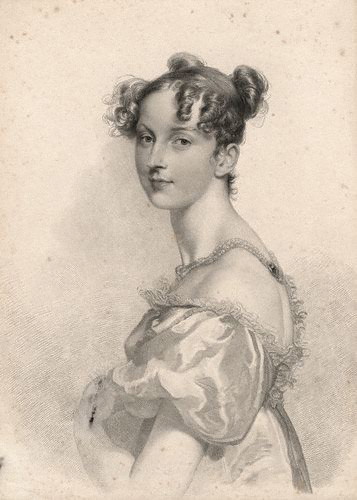 It is curious how much fuss there is about the possibility, however remote, of foreign lobbying having some influence on British politics. By foreign Tory Historian does not mean the European Union, whose legislation is British legislation, but countries and organizations outside it.
Yet in the days of Princess Lieven such influence and interference was taken almost for granted, if somewhat resented. Indeed, it was resented a good deal more towards the end of her stay in Britain as the Russian ambassadress or, rather, the extremely active wife of the Russian ambassador, than at the beginning of it.
Professor Charmley’s book, which Tory Historian has finished, details a number of instances. When George Canning became Foreign Secretary after Castereagh’s suicide in 1822 the Duke of Wellington found himself considerably out of sympathy with the new foreign policy and unhappy about the role he had been made to play at the Congress of Verona. Castlereagh had managed to keep the Continental powers happy through his obvious sympathy with the idea of affairs being run by a system of congresses though he always managed to steer clear of any direct involvement, pleading the need to placate Parliament and the people.
Canning was made of different stuff and his immediate aim seemed to be to break up the Congress system. Wellington, who, like most military men, dreaded the thought of another war, thought Canning’s policy was likely to lead to one. Princess Lieven found the same policy unhelpful to Russia and to Austria (at that time in close alliance, not least through her relationship with Metternich) so she persuaded the Duke to show the Cabinet dispatches on Spain, where there was a revolution brewing, to her, her husband and the Austrian ambassador. The Duke may not have been particularly happy with that idea but as he was even less happy with Canning’s foreign policy, he saw nothing terribly wrong with that. He had to prove that the Cabinet was not in agreement with the Foreign Secretary. Eventually, Canning’s policy became more helpful to Russia. Indeed, over the Greek rebellion against the Ottomans, he may have gone too far in agreeing to Russian intervention. Canning did not live long enough to have to deal with the outcome of his policy and it was the Duke of Wellington, now Prime Minister, who had to face the ever growing power and, in the shape of the Princess Lieven, insolence of Russia.
She, for herself, realized that the Duke was unsympathetic and intrigued mercilessly against him, not just in her letters to her brother Alexander Benckendorf, Nicholas I’s head of secret police and Count Nesselrode, the foreign Minister, but in constant communication and plotting with the leaders of the opposition, Earl Grey and Viscount Palmerston. Again, they apparently saw nothing wrong in conducting domestic politics through the medium of a foreign power’s representative, though an unofficial one.
Indeed, matters went so far as to make the Princess Lieven one of Earl Grey’s advisers when he was putting together his Cabinet in 1830. Indeed, she claimed to have been the person who got Palmerston his position as Foreign Secretary. The Belgian imbroglio turned Grey and Palmerston against the Russians and the Princess now set herself the task of getting rid of the latter in order to have a more pro-Russian British Foreign Secretary. She failed because she underestimated Palmerston (not the first nor the last person to do so). The outcome was the Lievens’ departure from London back to St Petersburg, a place she hated, being more of a fervent Russian patriot when she was out of that country.
It is possible that this sort of meddling could be done only by a person who had Dorothea Lieven’s peculiar combination of charm, intelligence and bare-faced cheek but there is, nevertheless, something odd in the notion that the wife of a foreign ambassador, herself extremely active, should have so much say in British domestic politics.
Today is, as every school child ought to know, St George's Day, the Patron Saint of numerous countries, cities, regions and organizations. Tory Historian has noted this in the past here and here. But of all the many countries that claim St George only one had William Shakespeare, the man who may well have been born on April 23 (baptized on April 26) 1564 and died on April 23 1616.
So, let us combine the two. Here is that famous speech from Henry V (Act 3, Scene 1, outside Harfleur):
Once more unto the breach, dear friends, once more;
Or close the wall up with our English dead.
In peace there's nothing so becomes a man
As modest stillness and humility:
But when the blast of war blows in our ears,
Then imitate the action of the tiger;
Stiffen the sinews, summon up the blood,
Disguise fair nature with hard-favour'd rage;
Then lend the eye a terrible aspect;
Let pry through the portage of the head
Like the brass cannon; let the brow o'erwhelm it
As fearfully as doth a galled rock
O'erhang and jutty his confounded base,
Swill'd with the wild and wasteful ocean.
Now set the teeth and stretch the nostril wide,
Hold hard the breath and bend up every spirit
To his full height. On, on, you noblest English.
Whose blood is fet from fathers of war-proof!
Fathers that, like so many Alexanders,
Have in these parts from morn till even fought
And sheathed their swords for lack of argument:
Dishonour not your mothers; now attest
That those whom you call'd fathers did beget you.
Be copy now to men of grosser blood,
And teach them how to war. And you, good yeoman,
Whose limbs were made in England, show us here
The mettle of your pasture; let us swear
That you are worth your breeding; which I doubt not;
For there is none of you so mean and base,
That hath not noble lustre in your eyes.
I see you stand like greyhounds in the slips,
Straining upon the start. The game's afoot:
Follow your spirit, and upon this charge
Cry 'God for Harry, England, and Saint George!'
 Tory Historian returns after an unconscionably long period of silence with news of a book, published in 2005 and bought in one of the few remaining second-hand bookshops in Charing Cross Road.
The Princess and the Politicians subtitled Sex, Intrigue and Diplomacy in Regency England is a biography of the Princess Lieven by one of our conservative (and Conservative) historians, John Charmley.
Tory Historian recalls the intriguing (in both senses of the word) character of the Princess Lieven appearing in history books as a minor character. That, says Professor Charmley, is how she has, quite erroneously in his opinion, viewed by historians who have too often assumed that politics remained an exclusively male sphere for the centuries before women had the vote.
Feminist historians, on the other hand, have not been particularly interested by aristocratic ladies who played a very large part in political life in Britain. As Professor Charmley does not add (perhaps he is being uncharacteristically charitable) this attitude has prevented many feminist historians from perceiving women's achievements in the past.
Nobody could call Professor Charmley a feminist (or any other kind of -ist) historian. His task here is to restore an important historical figure to her rightful place of which she has been deprived by being female, foreign and of somewhat lose morals.
More reports of the book will follow as Tory Historian progresses with the reading.
 Today is the birthday of one of the greatest of the great British inventors: Isambard Kingdom Brunel. By a strange coincidence, yesterday was the anniversary of the launch of the Great Western, Brunel's transatlantic ship. It left Avonmouth on April 8, 1838 and "with 600 long tons (610,000 kg) of coal, cargo and seven passengers on board. Brunel himself missed this initial crossing, having been injured during a fire that took place aboard the ship as she was returning from fitting out in London. The crossing of the Atlantic took 15 days and five hours, and the ship arrived at her destination with 200 long tons (200,000 kg) of coal still remaining, demonstrating that Brunel's calculations were correct."
Tory Historian wishes all the blog's readers a very happy Easter. A better than normal service will return after the holiday.
 It would be wrong to mention anniversaries and not refer to the assassination by car-bomb of Airey Neave MP on March 30 1979. Tory Historian well remembers the shock of hearing that his car blew up as he was driving it out of the Westminster Palace yard.
 Neave was a wholly admirable man, a war hero, the first to make "a home run" from Colditz, who then served in Military Intelligence and took part in the Nuremeberg Trials, flawed though these were. Subsequently, he was a close adviser to Margaret Thatcher, concerned particularly with Northern Ireland and the security services.
Anything like that, inevitably, produces loony conspiracy theories and there were many people on the left and on the right who could not accept that Airey Neave was assassinated by the Irish National Liberation Army (INLA), a splinter group of the IRA. There were also conspiracy theories about Neave himself.
The Wikipedia entry gives a fascinating list of all those theories and their adherents. It is somewhat disconcerting to find that Tony Benn's reaction when presented with arguments that Neave wanted to have him assassinated were considerably saner than Enoch Powell's who maintained that the assassination had been organized by the Americans or by MI6. Perhaps both.
 The biggest of all: on March 30, 1981 there was an attempt to assassinate President Reagan, which very nearly succeeded. The two pictures of the security services in action and Reagan being hustled off into a car, thence to a hospital, do not give the full story - he was far more seriously wounded than anyone, including him, realized at first.
There was a moment of high comedy when Secretary of State Alexander Haig announced that he was in charge until the Vice-President, George H. W. Bush could get back to Washington DC. In actual fact the Secretary of State comes below the Vice-President, the Speaker of the House (Tip O'Neill) and the President pro tempore of the Senate (J. Storm Thurmond). But details like that were not going to stop Haig. In any case, the Veep flew back and Reagan recovered remarkably quickly, given that his lung had been punctured.
There is a wonderful, though unsubstantiated story of Reagan being wheeled to the operating theatre and him saying with his usual impish grin to the surgeon: "I hope you are a Republican." The surgeon is supposed to have replied: "Mr President, today we are all Republicans." Si non e vero, e ben trovato. One interesting aspect of that attempt, the first any American President had actually survived, is not generally discussed, and that is the effect it had on Tecumseh's Curse. Tory Historian remembers reading about that curse, supposedly put upon President William Harrison by the brother of the defeated Shawnee chief, Tecumseh, in an early edition of Ripley's Believe it or Not, which enumerated all the presidents elected in the year with 0 at the end (that is, every twenty years) who died in office starting with Harrison, elected in 1840 only to die in 1841. The book had been published in 1930 and the section on Tecumseh's Curse with the portentous: 1940 ????? As we know, the man elected in 1940, Franklin D. Roosevelt, did die in office, as did the man elected in 1960, John F. Kennedy. But not the man elected in 1980, who survived that assassination attempt or the man elected, in 2,000, George W. Bush. I think we can assume that by surviving Reagan broke the curse.
Having spent so long on the Reagan story Tory Historian feels that the other anniversaries, some bad like the assassination of Airey Neave MP, the death of the Queen Mother, some good like the ending of the Rosenberg trial with them being found guilty of espionage and some simply hilarious like John Major climbing on his famous soap box during the 1992 election campaign, deserve separate postings.
 The death of Queen Elizabeth I on March 24, 1603 meant that James VI of Scotland succeeded to the English throne as James I of England. This brought about the de facto union of the two countries under the Crown.
 Of course, the death of a lady who is 105, has lived a good life and died peacefully is not a tragic matter but this news saddened Tory Historian a little. Andree Peel, Agent Rose in the Resistance, who saved 100 or more Allied servicemen, survived Nazi concentration camps and escaped the firing squad, died earlier this month and is being buried today.
Tory Historian cannot help feeling that the manager of the care home where Mrs Peel had lived and died ought not to have been inteviewed if all she could come up with was a completely trite comment that makes one wonder if she actually remembers which one Mrs Peel was: "We are all a bit shell-shocked here. She was lovely - an amazing character with such a strong spirit."
Tory Historian was particularly impressed by the information that some time after her husband's death, Mrs Peel "found companionship with Brian Westaway, a fellow Lampton House resident".
 One of the four patron saints of this country, St Patrick is, as far as anyone can establish, an interesting character. It did not surprise Tory Historian to find out that much of the mythology associated with St Paddy was either invented later or has more to do with other characters of the period.
It is, interestingly, enough his death that is celebrated on March 17, other dates being somewhat uncertain. The year, as that great history book 1066 And All That would put it, being completely unmemorable. As the detailed and cautious article on Wikipedia says:
Saint Patrick's Day (17 March) is celebrated both in and outside of Ireland, as both a liturgical and non-liturgical holiday. In the dioceses of Ireland it is a both a solemnity and a holy day of obligation and outside of Ireland, it can be a celebration of Ireland itself.One more thing to remember about St Patrick: so far as anyone can tell, he was born in Roman Britain and was something of a foreigner or, at least, an outsider in Ireland.
Tory Historian is immensely grateful to a sadly anonymous commenter on a previous posting on a clerical detective, who has pointed out that the excellent website, Clerical Detectives has moved. Here is the link. Very well worth browsing and following up on suggestions.
 ... to Thomas Arne, composer of many things, but especially of Rule Britannia, and one of the first people to fight over copyright:
In 1741 Arne filed a complaint in Chancery pertaining to a breach of musical copyright and claimed that some of his theatrical songs had been printed and sold by Henry Roberts and John Johnson, the London booksellers and music distributors. The matter was settled out of court. Arne was certainly one of the very first composers to have appealed to the law over copyright issues.It seems impossible to put up this posting without a video of Rule Britannia from one of the many Last Nights of the Proms. Tory Historian is spoilt for choice. Perhaps this one from 2008 with Bryn Terfel singing the solo.


Two pictures from the Tibetan uprising against Chinese rule that broke out on March 10, 1959 and was suppressed swiftly and brutally. These two show a Chinese officer addressing Tibetans after the uprising had been put down and refugees leaving in large numbers. The Guardian has a whole selection of photographs.
 Not a round date but Tory Historian likes to celebrate this one. March 5, 1953 was the day when the death of Joseph Vissarionovich Stalin, one of the greatest mass murderers of all times (probably Mao Tse-Tung was worse but who is counting) was announced. There is some mystery, according to various accounts, not least by his daughter Svetlana, as to whether he did die on that day or the day before. Had he simply had a stroke and his entourage was too scared to do anything about it, hoping that he would simply die and that would be that? Possible.
 The picture of the funeral procession does not show the exact truth. As Moscow was filled with crowds who were ordered to process, the side streets were closed off by the police and the secret police. People who tried to get out because of the ever growing numbers found their way blocked and there was a huge crush with unknown numbers killed in it. As Stalin lived, so he died - in a sea of blood.


